
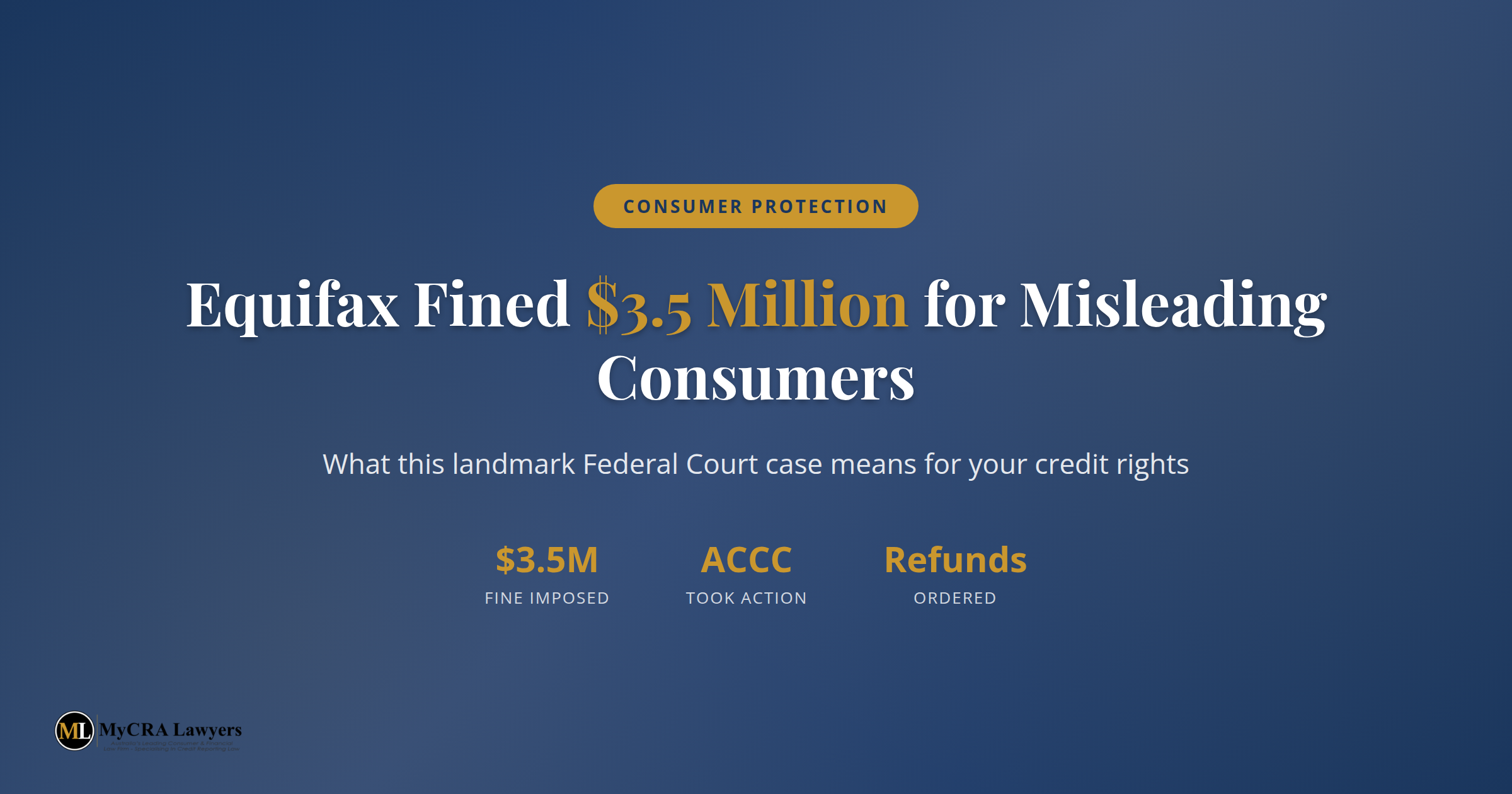
When Equifax was fined $3.5 million by the Federal Court for misleading consumers, it sent a powerful message: even the largest credit reporting bodies in Australia must play by the rules. This landmark case demonstrates that credit bureaus aren’t untouchable—and that consumers have real protections under Australian law.
For anyone who has ever felt powerless against the credit reporting system, this case provides important lessons about your rights and the accountability mechanisms that exist to protect you.
What Happened: The Equifax Federal Court Case
The Australian Competition and Consumer Commission (ACCC) took Equifax (formerly known as Veda Advantage) to the Federal Court over allegations that the company had misled consumers about their credit monitoring and protection products.
The Federal Court found that Equifax had engaged in misleading conduct and ordered the company to pay $3.5 million in penalties plus $100,000 in legal costs. But the case didn’t stop there—Equifax was also required to establish a refund process for affected consumers.
Products Involved in the Case
The products that were subject to the court’s findings included many of Equifax’s consumer-facing credit monitoring services:
- My Credit File
- My Credit Alert / My Veda Alert
- Equifax Basic / Veda Starter
- Equifax Plus / Veda Access
- Equifax Advanced / Veda ID
- Equifax Premium / Veda Plan
If you subscribed to any of these services during the relevant period, you may have been entitled to a refund.

Why This Case Matters for All Australians
The Equifax case is significant beyond just the consumers who received refunds. It established several important precedents:
1. Credit Bureaus Are Not Above the Law
Many Australians feel powerless when dealing with credit reporting bodies. The Equifax case proves that these organisations must comply with consumer protection laws, and that regulatory bodies like the ACCC will take action when they don’t.
2. Misleading Conduct Has Consequences
A $3.5 million fine is substantial, even for a company the size of Equifax. It sends a clear message that misleading consumers—whether about credit monitoring products or the credit reporting process itself—carries real financial penalties.
3. Consumers Have Recourse
The refund process ordered by the court demonstrates that when credit bureaus do the wrong thing, affected consumers can receive compensation. This principle extends to other situations where credit information has been incorrectly handled.
The Broader Problem: Errors in the Credit Reporting System
The Equifax case highlighted issues with one company’s consumer products, but it’s part of a broader pattern of problems within Australia’s credit reporting system. Research and industry data consistently show that credit file errors are surprisingly common.
Types of Credit Report Errors
Beyond misleading product marketing, the credit reporting system can fail consumers in many ways:
- Incorrect default listings — defaults listed without proper notice or in breach of timing requirements
- Identity errors — information belonging to someone else appearing on your file
- Outdated information — listings that should have been removed remaining on file
- Duplicate entries — the same debt appearing multiple times
- Incorrect amounts — wrong figures for debts or defaults
Each of these errors can have serious consequences for your ability to obtain credit, rent property, or even secure employment in some industries.
Think Your Credit File Has Errors?
We can review your credit report and identify any listings that may be incorrect or removable.
or call 1300 667 218
For more information about credit reporting regulations and your rights, see the Office of the Australian Information Commissioner (OAIC) and the Australian Competition and Consumer Commission (ACCC).
Your Rights Under Australian Credit Reporting Law
The Equifax case was brought under consumer protection law, but Australians also have significant rights under credit reporting legislation. The Privacy Act 1988 and the Credit Reporting Code establish rules that credit providers and credit reporting bodies must follow.
Key Consumer Protections
Right to Access: You can obtain a free copy of your credit report from each of the three main credit bureaus (Equifax, Experian, and illion) once every three months.
Right to Correction: If information on your credit report is incorrect, you have the right to request correction. Credit reporting bodies must investigate and respond within 30 days.
Notice Requirements: Before listing a default, creditors must provide you with proper notice and give you an opportunity to address the debt. Failure to follow these requirements can make a listing challengeable.
Listing Time Limits: Different types of credit information have maximum retention periods. For example, most defaults must be removed after five years from the date of listing.

How to Check If Your Credit File Has Problems
Given the documented issues with credit reporting accuracy, it’s worth regularly checking your credit file. Here’s how:
Step 1: Get Your Credit Reports
Request free copies from all three major credit bureaus:
- Equifax — equifax.com.au
- Experian — experian.com.au
- illion — illion.com.au
Check all three, as different creditors report to different bureaus, and your information may vary across them.
Step 2: Review for Errors
Look for:
- Any defaults or negative listings you don’t recognise
- Accounts that aren’t yours
- Incorrect personal details (wrong address, employer, etc.)
- Outdated information that should have been removed
- Credit enquiries from companies you never applied to
Step 3: Take Action on Issues
If you find errors, you have options. You can dispute directly with the credit bureau, complain to the creditor, or seek professional assistance if the issues are complex or the initial dispute is unsuccessful.
The Importance of Professional Legal Assistance
While individuals can dispute credit report errors directly, there are situations where professional legal assistance makes a significant difference:
When to Consider Legal Help
- Complex compliance issues — When the listing may breach technical requirements that aren’t obvious to consumers
- Disputed disputes — When your initial correction request has been denied
- Time-sensitive situations — When you need a listing removed quickly for a loan application or other purpose
- Multiple issues — When your credit file has several problems that need coordinated attention
Credit repair lawyers understand the technical requirements creditors must meet and can identify grounds for removal that consumers might miss. At MyCRA Lawyers, we’ve helped thousands of Australians address credit file errors and improve their credit position.

Conclusion
The Equifax $3.5 million fine demonstrates that Australia’s credit reporting system, while imperfect, has accountability mechanisms that work. When credit bureaus mislead consumers or fail to follow the rules, there are consequences.
For individual consumers, this case reinforces an important message: you have rights, and those rights are enforceable. Whether you’re dealing with misleading credit products, incorrect listings, or other credit file issues, there are pathways to resolution.
The credit reporting system may feel overwhelming, but you don’t have to navigate it alone—and as the Equifax case shows, even the biggest players in the industry aren’t immune to being held accountable.
Ready to Address Your Credit Issues?
Don’t let credit file errors hold you back. Our specialist lawyers can review your situation and advise on the best path forward.
📞 1300 667 218 | Australia-wide service
Images: Stock photos via Unsplash

Leave A Comment