
Updated 14 October 2026. By Graham Doessel.
Brokers often spot unlawful reporting before the client does. Flag defaults, enquiry clusters, judgments and repayment history information early. Pull Equifax and Experian before lodging. Refer contested listings to a specialist credit repair law firm instead of burning the client’s enquiry trail on hopeless applications.
Hi, I’m Graham. Brokers have worked with us for years because clean files close loans. Unlawful or non-compliant reporting is not a vibe, it is a notice and Credit Reporting Code problem hiding inside a PDF your client never opened.
What “unlawful credit reporting” means in broker language
In day-to-day deal talk, it usually means information on a credit file that may not meet Privacy Act Part IIIA / Credit Reporting Code requirements, or that is simply wrong: wrong person, wrong amount, missing notices, hardship ignored, unauthorised enquiry. Lenders still underwrite what they see. Your job is to spot the landmines before the auto-decline email ruins settlement timing.
You do not need to become a privacy lawyer. You need a checklist and a referral trigger.
What to spot on the file
- Defaults with thin or missing notice evidence
- Unauthorised, duplicate or payday enquiry clusters
- Judgments treated as if they were ordinary defaults
- RHI late marks that ignore hardship arrangements
- Identity mismatches, clearouts and “also known as” mess
- A clean Equifax with a dirty Experian (or the reverse), Experian includes former illion data from 1 April 2026
Service map: defaults, enquiries, judgments, RHI, credit repair lawyers Australia.
Broker playbook before you lodge
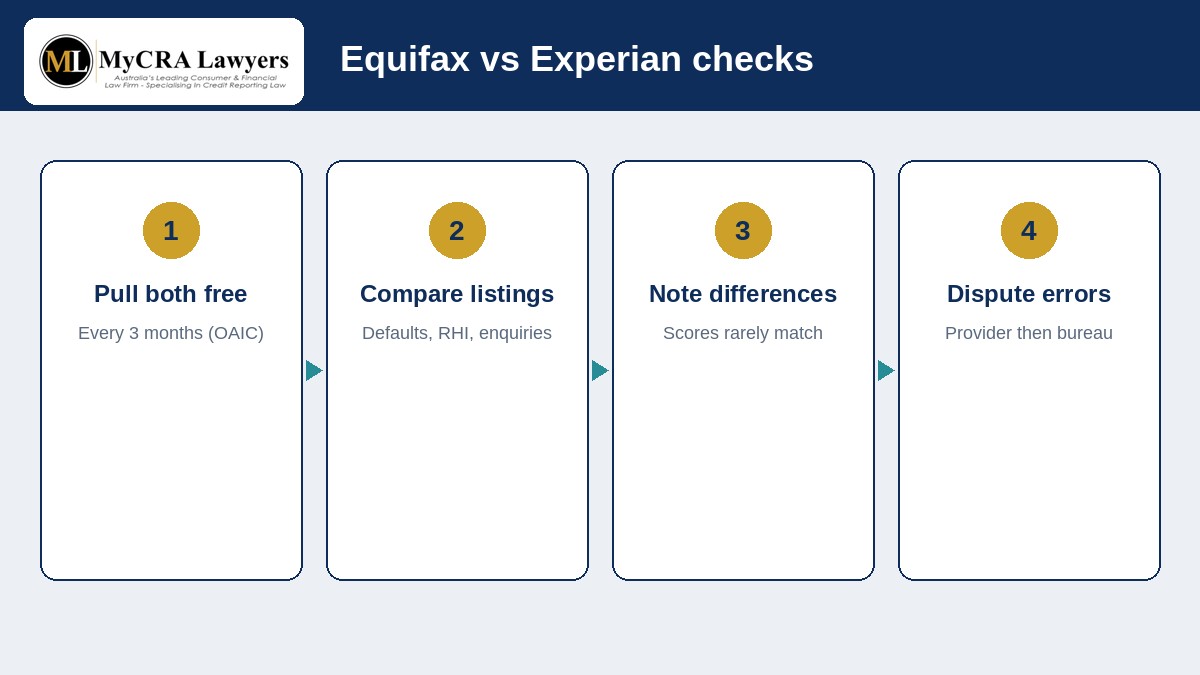
- Get the client’s free Equifax and Experian reports (every three months; also after a recent refusal).
- Build a one-page negatives list: type, creditor, date, bureau.
- Ask whether hardship was requested when late marks or defaults appeared.
- Pause fresh hard enquiries while you decide strategy.
- Refer early if the listing looks contested, not the night before exchange.
- Tell the client, in plain English, that another shotgun application can make the trail worse.
Free client entry point: app.fixmybadcredit.com.au.
How this shows up in declined deals
Classic pattern: income stacks, LVR is fine, then the credit policy engine trips on a telco default with contested notices, or six payday enquiries from a rough quarter two years ago. A second decline adds another enquiry. By the third try, the file is harder than when you started. That spiral is avoidable. For the full process, see our guide on how to remove a default from your credit file.
What not to do
- Shotgun the panel “to see who says yes”
- Tell the client to pay every listing first without a compliance read
- Assume one bureau equals both
- Promise the client a lawyer can “guarantee” removal
On consumer defaults accepted after initial assessment, our success rate is 91.6%, independently audited by a chartered accountant. Our own records show 29.4% of defaults are removed within 7 days. Fixed fees quoted before you start. Selected matters include a Money Back Guarantee on the published terms.
Don’t spend another month stuck in Credit Prison. Call our credit repair lawyers on 1300 667 218 or book a 15-minute intro call at https://mycralawyers.com.au/15min-credit-repair-intro-call/ . If we think your chances are low, we’ll tell you straight.
Documenting the referral
When you refer, send both bureau PDFs, the deal timeline, and the decline reason if you have it. Note any hardship conversations the client remembers. That package lets a specialist start auditing instead of interviewing from zero. Email docs@mycralawyers.com.au or start the client on app.fixmybadcredit.com.au.
Compliance culture inside the brokerage
Train intake staff to ask for credit files before the first panel discussion. Put “no fresh applications during audit” in your process notes. Celebrate the deal you delayed by two weeks that then settled, not the three declines you collected in five days. Culture beats heroics.
Unlawful or non-compliant reporting is also a trust issue. Clients who feel blindsided by a listing they never understood rarely leave five-star reviews, even if you eventually find another lender.
Plain-English script for the client meeting
“Before we lodge, we pull Equifax and Experian. Free every three months. If something looks non-compliant or wrong, we pause and get it audited rather than collecting declines.” That script sets expectations and stops the client from applying for a car loan mid-process because a yard offered a weekend special.
Put the same message in your engagement email. Written beats spoken when stress is high.
What brokers should flag early
Unlawful or non-compliant reporting often shows up as: defaults without workable notice trails, identity mash-ups, enquiry spikes the client cannot explain, or hardship-era listings. Pause the application. Get both bureau PDFs. Refer before you burn panels.
When to pause · referral guide · why brokers refer lawyers.
Equifax and Experian: always both
Australia’s consumer credit reporting bodies are Equifax and Experian. Experian absorbed illion’s consumer bureau from 1 April 2026, so you do not need a separate illion report today. Scores rarely match. Free consumer reports are available every three months (OAIC). After a refusal, ask about free access tied to that decision. Save PDFs, not only score dials.
A simple cleanup order
- Identity and contact data
- Defaults and serious credit infringements
- Judgments
- Enquiries
- Repayment history information
- Hardship flags
Dispute clear errors before you generate new hard enquiries. For broker deals, pause lodgement until the triage is honest. Use app.fixmybadcredit.com.au for a free file analysis once you have the PDFs.
Putting it into practice this month
Start with both free Equifax and Experian consumer credit reports. Under OAIC guidance you can access a free consumer credit report from each credit reporting body once every three months, and you should also ask about free access after a credit refusal or after a correction. Save the PDFs. Compare identity details, defaults, serious credit infringements, judgments, enquiries and repayment history information side by side.
Next, write a dated chronology for anything that looks wrong: notices received or not received, hardship emails, payments, address changes, and collector contact. Send a clear written dispute to the credit provider that disclosed the information, attach your evidence, and diary the response timeframes under the Privacy (Credit Reporting) Code. Use the bureau dispute process where required. If the firm is an AFCA member and internal dispute resolution fails, AFCA is free for eligible consumers. OAIC pathways may fit some credit reporting privacy complaints. The National Debt Helpline on 1800 007 007 remains available for budgeting and hardship conversations. See how a MyCRA file runs from first call to removal.
If a broker deadline is close, a judgment or clearout is involved, or the creditor contests the facts, get a legal triage rather than spraying new hard enquiries across lenders. Email docs@mycralawyers.com.au, call 1300 667 218, or book a 15-minute intro call. Read the full framework on our credit repair lawyers Australia cornerstone. On consumer defaults accepted after initial assessment, our success rate is 91.6%, independently audited by a chartered accountant. Our own records show 29.4% of defaults are removed within 7 days. Fixed fees in writing. Selected matters include a Money Back Guarantee on published terms. Postal address: PO Box 169, Aspley QLD 4034.
FAQ
Should brokers pull both bureaus?
Yes, Equifax and Experian.
When do I refer out?
When listings look non-compliant, contested, or the lending deadline is tight.
Will another enquiry help test the file?
Usually no, it can make things worse.
Free client starting point?
Free reports every three months plus the FixMyBadCredit analysis.
Broker contact?
1300 667 218 or docs@mycralawyers.com.au.
This is general information, not legal advice. Liability limited by a scheme approved under Professional Standards Legislation.
MyCRA Lawyers | Australia-wide | 1300 667 218 | docs@mycralawyers.com.au | PO Box 169, Aspley QLD 4034


![[MEDIA RELEASE] Why tens of thousands of Australians’ credit scores will jump on February 14 automatically](https://mycralawyers.com.au/wp-content/uploads/2020/01/4k-500x383.jpg)
![Senate Enquiry Into Credit Repair In Australia [email]](https://mycralawyers.com.au/wp-content/uploads/2019/03/Senate-Enequiry-into-credit-repair-500x383.jpg)




Leave A Comment