Updated 15 October 2026. By Graham Doessel.
Mortgage shopping can spray enquiries across the file in a week. Brokers should slow down, get Equifax and Experian reports, and clean what is lawfully cleanable before a panel shotgun. Enquiry spikes are a process problem as much as a credit problem. Free bureau access every three months still applies, use it before you lodge.
Hi, I’m Graham. Hot markets create cold declines. Everyone lodges; nobody reads the PDF first. Then the client’s Credit Prison gets a fresh padlock called “five more hard enquiries this month.”
Why enquiry spikes damage otherwise good deals
Lender scorecards treat recent hard enquiry volume as a risk signal. In a busy refinance or purchase wave, clients comparison-shop, click lender “check my rate” tools, and visit car yards while the home loan is on foot. Each hard footprint can stack. The serviceability spreadsheet still looks fine. The policy engine does not.
That is not a reason to panic. It is a reason to sequence work: file first, lodge second. Brokers who build that habit protect referral partners and keep settlement dates alive.
What changed in the bureau landscape
Clients still talk about “three bureaus.” In 2026 the mainstream consumer picture is Equifax and Experian. Experian absorbed illion; from 1 April 2026 Experian’s consumer report includes former illion data. If your software or an old checklist still says “pull illion separately,” update the checklist.
Broker playbook for a hot enquiry market
- Free reports up front: Equifax and Experian. OAIC: free consumer report every three months.
- Map two years of hard enquiries: brand, date, product. Highlight payday and BNPL clusters.
- Freeze non-essential applications: including “just looking” personal loans and storecards.
- Triage negatives: defaults, judgments, RHI, identity errors. Link to credit repair lawyers Australia when contested.
- Choose the panel deliberately: ask which lenders on your list hate this trail most.
- Refer early: not after three declines have already added more enquiries.
What clients need to hear (plain English)
“Every application can leave a footprint. We are going to read both bureau files before we lodge, because fixing the trail is cheaper than collecting declines.” That conversation saves deals. Soft education beats surprise decline emails at 4pm on a Friday.
When credit repair legal work helps
Unauthorised or incorrect enquiries, non-compliant defaults, judgments and hardship-related RHI issues are audit territory. Genuine shopping enquiries the client made usually stay. Be honest about that distinction so expectations stay adult. On consumer defaults accepted after initial assessment, our success rate is 91.6%, independently audited by a chartered accountant. Our own records show 29.4% of defaults are removed within 7 days. Fixed fees quoted before you start. Selected matters include a Money Back Guarantee on the published terms.
Client self-serve start: app.fixmybadcredit.com.au. Enquiry deep-dive: how enquiries affect scores.
Don’t spend another month stuck in Credit Prison. Call our credit repair lawyers on 1300 667 218 or book a 15-minute intro call at https://mycralawyers.com.au/15min-credit-repair-intro-call/ . If we think your chances are low, we’ll tell you straight.
Operational tips for busy weeks
Batch free-report reminders into your pre-lodge checklist. Keep a one-page “enquiry hygiene” PDF for clients. If your CRM can flag clients with three or more hard enquiries in six months, use it. The goal is not to scare people off credit forever, it is to stop accidental self-sabotage mid-purchase. If enquiries have piled up, read excess credit enquiries: what’s the solution?
When volumes spike industry-wide, turnaround times at repair firms and AFCA also stretch. That is another reason to refer early rather than after contracts are unconditional. Parallel paths beat last-minute miracles.
Talking to vendor advocates and buyers’ agents
If you work with buyers’ agents, brief them that credit-file cleanup can move settlement risk. A calm explanation beats a frantic Friday call. Share the free-report and free-analysis links so non-broker partners stop inventing folk remedies. Brokers see this often, as in an Australian broker’s account of unlawful credit reporting.
Measuring whether the playbook works
Track how many files you paused for credit triage versus how many you lodged blind. Track decline reasons coded to enquiry volume versus defaults. In a few months you will see whether the pause-and-clean habit is saving deals. Brokers who measure this stop arguing about “feel” and start defending process.
Protecting the client file during a hot market
When mortgage enquiries spike industry-wide, individual files still live or die on listings and enquiry hygiene. Brokers should sequence credit checks, avoid duplicate hard pulls across panels, and triage repair issues before lodgement.
Client script: we pause to protect your enquiry budget and settlement odds, not because you failed a vibe check.
Pre-loan checklist · cornerstone.
Equifax and Experian: always both
Australia’s consumer credit reporting bodies are Equifax and Experian. Experian absorbed illion’s consumer bureau from 1 April 2026, so you do not need a separate illion report today. Scores rarely match. Free consumer reports are available every three months (OAIC). After a refusal, ask about free access tied to that decision. Save PDFs, not only score dials.
A simple cleanup order
- Identity and contact data
- Defaults and serious credit infringements
- Judgments
- Enquiries
- Repayment history information
- Hardship flags
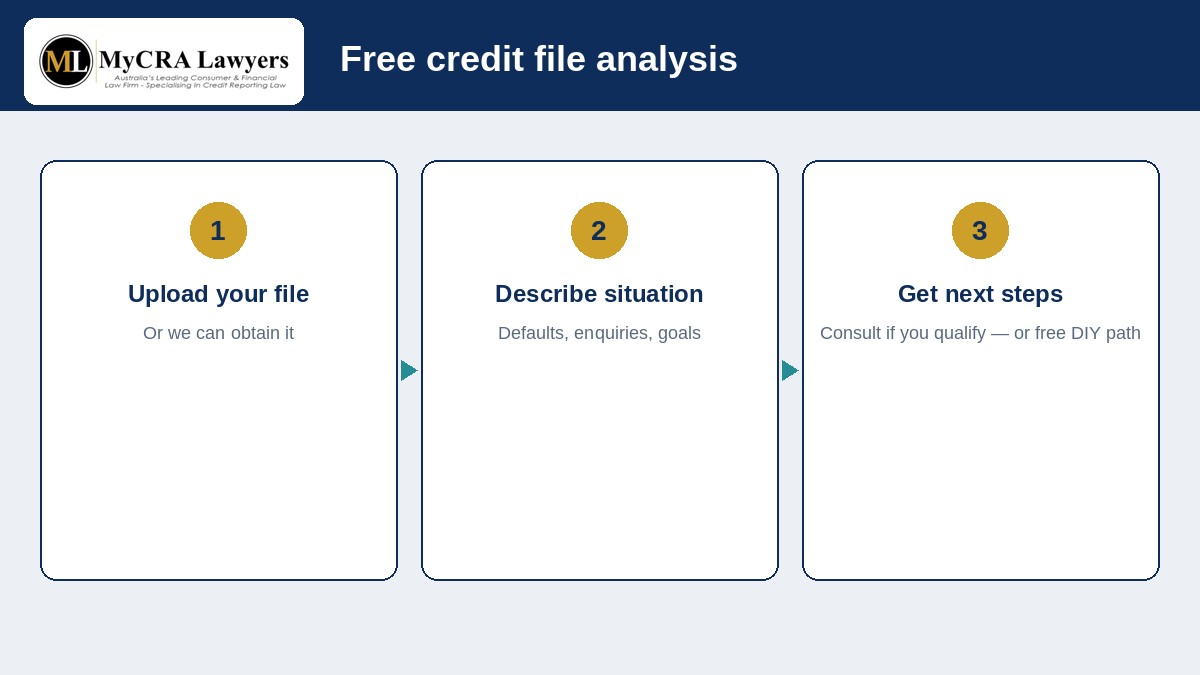
Dispute clear errors before you generate new hard enquiries. For broker deals, pause lodgement until the triage is honest. Use app.fixmybadcredit.com.au for a free file analysis once you have the PDFs.
Putting it into practice this month
Start with both free Equifax and Experian consumer credit reports. Under OAIC guidance you can access a free consumer credit report from each credit reporting body once every three months, and you should also ask about free access after a credit refusal or after a correction. Save the PDFs. Compare identity details, defaults, serious credit infringements, judgments, enquiries and repayment history information side by side.
Next, write a dated chronology for anything that looks wrong: notices received or not received, hardship emails, payments, address changes, and collector contact. Send a clear written dispute to the credit provider that disclosed the information, attach your evidence, and diary the response timeframes under the Privacy (Credit Reporting) Code. Use the bureau dispute process where required. If the firm is an AFCA member and internal dispute resolution fails, AFCA is free for eligible consumers. OAIC pathways may fit some credit reporting privacy complaints. The National Debt Helpline on 1800 007 007 remains available for budgeting and hardship conversations. Here is how enquiry removal works with us.
If a broker deadline is close, a judgment or clearout is involved, or the creditor contests the facts, get a legal triage rather than spraying new hard enquiries across lenders. Email docs@mycralawyers.com.au, call 1300 667 218, or book a 15-minute intro call. Read the full framework on our credit repair lawyers Australia cornerstone. On consumer defaults accepted after initial assessment, our success rate is 91.6%, independently audited by a chartered accountant. Our own records show 29.4% of defaults are removed within 7 days. Fixed fees in writing. Selected matters include a Money Back Guarantee on published terms. Postal address: PO Box 169, Aspley QLD 4034.
FAQ
Do market enquiry spikes change the law?
No. They change how many damaged files you see.
Is rate shopping safe?
Broker-managed processes help; uncontrolled multi-brand applications often do not.
Which bureaus?
Equifax and Experian.
Can enquiries be removed?
Sometimes if unauthorised or incorrect, not merely regretted.
How fast can MyCRA assess?
Start with the free analysis or intro call.
This is general information, not legal advice. Liability limited by a scheme approved under Professional Standards Legislation.
MyCRA Lawyers | Australia-wide | 1300 667 218 | docs@mycralawyers.com.au | PO Box 169, Aspley QLD 4034