
Updated 13 October 2026. By Graham Doessel.
A short burst of applications can do more damage than one large loan check. Soft checks and your own free Equifax and Experian reports (available every three months) are different. Some unauthorised, duplicate or incorrectly listed enquiries may be removable; most genuine applications are not. Stop new applications, compare both bureau files, then decide what is worth disputing.
Hi, I’m Graham. Brokers send me files where the income looks fine and the enquiry trail looks like a shopping receipt. That is Credit Prison by a thousand cuts. The fix is rarely “apply at one more lender and hope.”
Hard vs soft enquiries (quick refresher)
A hard enquiry is what happens when you apply for credit and the lender accesses your credit reporting information as part of that assessment. Other lenders can usually see it. A soft enquiry, including you accessing your own credit reporting information, generally does not behave like a lender application check on scorecards. More detail sits in our enquiry removal service page and the credit repair lawyers Australia cornerstone.
Australia now has two mainstream consumer credit reporting bodies: Equifax and Experian. Experian absorbed illion’s consumer bureau; from 1 April 2026 an Experian report includes data previously held separately by illion. If your Equifax file looks quiet and Experian looks busy (or the reverse), that alone can explain a surprise decline.
What “excess” looks like in the real world
There is no single Privacy Act number that equals an automatic decline. Lender policy engines differ. What brokers and assessors watch for in practice: For the full process, see our guide on how to remove a default from your credit file.
- Several hard enquiries inside six months
- A pile-up across twelve months, especially mixed with high-cost credit brands
- Repeated “just checking” car finance or storecard applications
- Payday or short-term credit brands stacked close together
One broker-managed home loan enquiry is rarely the villain. A weekend of comparison shopping across five non-bank personal loan brands often is.
Why lenders care
Enquiry volume is a risk signal. It can look like cashflow stress, rate shopping without a plan, or an applicant who will take any credit available. Even when your income supports the loan, automated scorecards can knock you out before a human reads the file. That is why excess enquiries and unpaid defaults often travel together in declined deals, not because the law ties them together, but because the same chaos produced both.
Which enquiries may be removable?
Lawful removal turns on accuracy and compliance, not regret. Candidates we commonly audit:
- Unauthorised checks (you did not apply or did not consent)
- Duplicates or incorrectly recorded enquiries
- Wrong identity match (someone else’s application on your file)
- Listings that fail disclosure rules under Privacy Act Part IIIA / the Credit Reporting Code
Ordinary hard enquiries from applications you made that were listed correctly usually stay for their retention period (commonly discussed as five years, confirm the dates on your report).
A practical clean-up sequence
- Freeze new applications: including BNPL and “pre-approval” chats that still leave hard footprints.
- Get free Equifax and Experian reports: every three months under OAIC guidance; also after a credit refusal within 90 days.
- Build a two-year enquiry table: who, when, product type, which bureau.
- Show your broker before they lodge. Ask which panel lenders hate your trail most.
- Dispute only what has a compliance or accuracy angle: or start a free analysis first.
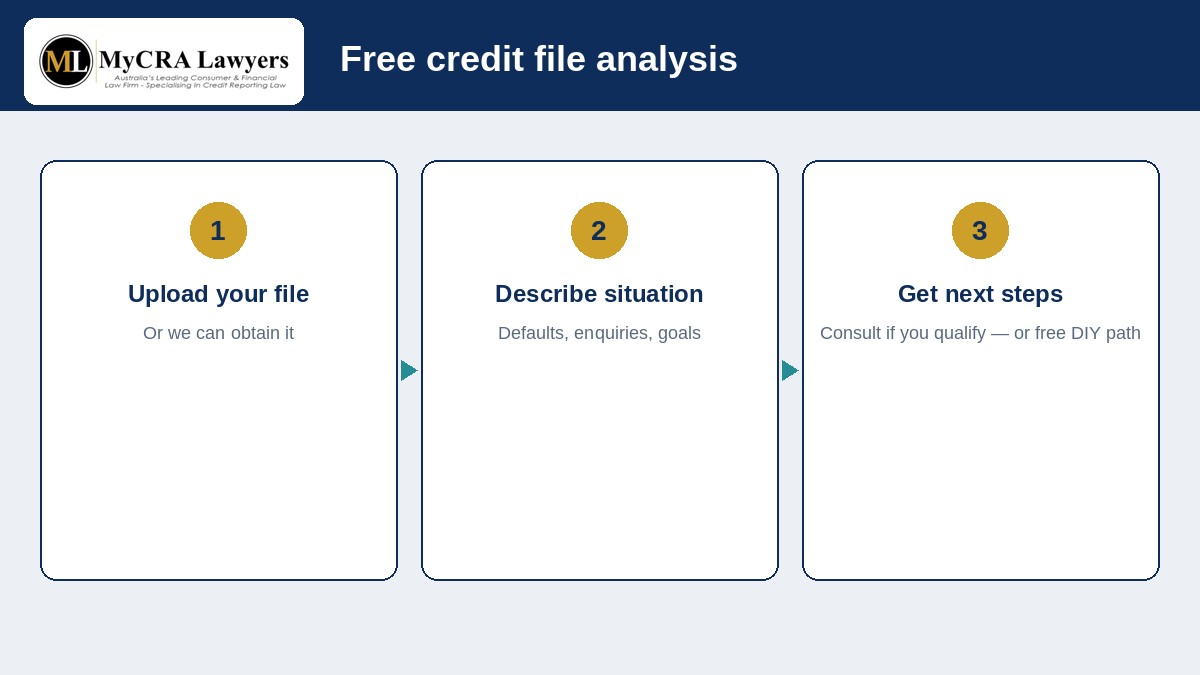
Free credit file analysis: app.fixmybadcredit.com.au. Related reading: how credit enquiries affect your score.
When MyCRA gets involved
We review Equifax and Experian information and audit enquiries alongside defaults, judgments and RHI. On consumer defaults accepted after initial assessment, our success rate is 91.6%, independently audited by a chartered accountant. Our own records show 29.4% of defaults are removed within 7 days. Fixed fees quoted before you start. Selected matters include a Money Back Guarantee on the published terms. If you want the detail first, read how it works.
Don’t spend another month stuck in Credit Prison. Call our credit repair lawyers on 1300 667 218 or book a 15-minute intro call at https://mycralawyers.com.au/15min-credit-repair-intro-call/ . If we think your chances are low, we’ll tell you straight.
Stopping an enquiry cluster
Excess enquiries are usually a behaviour problem first and a dispute problem second. Freeze new applications. Tell every car yard and “pre-approval” desk you will not authorise a hard pull. Then map what is already on Equifax and Experian.
Removable enquiries tend to be unauthorised, fraudulent or clearly incorrect. Ordinary applications you made typically stay. Strategy is about timing the next real application after the noise settles, and cleaning anything that is actually wrong.
How enquiries affect scores · enquiry removal · how many are too many.
Putting it into practice this month
Start with both free Equifax and Experian consumer credit reports. Under OAIC guidance you can access a free consumer credit report from each credit reporting body once every three months, and you should also ask about free access after a credit refusal or after a correction. Save the PDFs. Compare identity details, defaults, serious credit infringements, judgments, enquiries and repayment history information side by side.
Next, write a dated chronology for anything that looks wrong: notices received or not received, hardship emails, payments, address changes, and collector contact. Send a clear written dispute to the credit provider that disclosed the information, attach your evidence, and diary the response timeframes under the Privacy (Credit Reporting) Code. Use the bureau dispute process where required. If the firm is an AFCA member and internal dispute resolution fails, AFCA is free for eligible consumers. OAIC pathways may fit some credit reporting privacy complaints. The National Debt Helpline on 1800 007 007 remains available for budgeting and hardship conversations.
If a broker deadline is close, a judgment or clearout is involved, or the creditor contests the facts, get a legal triage rather than spraying new hard enquiries across lenders. Email docs@mycralawyers.com.au, call 1300 667 218, or book a 15-minute intro call. Read the full framework on our credit repair lawyers Australia cornerstone. On consumer defaults accepted after initial assessment, our success rate is 91.6%, independently audited by a chartered accountant. Our own records show 29.4% of defaults are removed within 7 days. Fixed fees in writing. Selected matters include a Money Back Guarantee on published terms. Postal address: PO Box 169, Aspley QLD 4034.
FAQ
Do soft enquiries count toward excess?
Generally no for lender application scorecards. Accessing your own free credit report should not create a hard enquiry.
Can MyCRA wipe a whole enquiry trail?
No. We target unauthorised, incorrect or non-compliant listings. Genuine applications usually remain.
Should brokers delay lodging?
Often yes until the enquiry picture is understood and any enforceable disputes are underway.
How often are free reports available?
A credit reporting body must give you a free consumer credit report once every three months (OAIC), plus specified extra free-access situations.
Which bureaus matter in 2026?
Equifax and Experian. Former illion consumer data sits with Experian from 1 April 2026.
This is general information, not legal advice. Liability limited by a scheme approved under Professional Standards Legislation.
MyCRA Lawyers | Australia-wide | 1300 667 218 | docs@mycralawyers.com.au | PO Box 169, Aspley QLD 4034

Leave A Comment