
Updated 15 October 2026. By Graham Doessel.
Creditors and collectors have duties when a listing is wrong. If a listing is wrong, out of date, or incomplete in a way that matters, they must deal with correction requests under the statutory framework and Credit Reporting Code timeframes. Consumers can escalate to AFCA (where eligible) or the OAIC. Free Equifax and Experian reports every three months are how you spot the problem.
Hi, I’m Graham. Creditors correcting mistakes is not a favour. It is the Act. Too many people apologise their way through a dispute that should be an evidence pack. Credit Prison loves polite silence.
What “correction” covers in practice
Typical correction fights we see: wrong amounts, wrong personal details, defaults listed without required notices, enquiries the consumer did not authorise, paid status not updated, hardship arrangements ignored in RHI, and identity mix-ups. Framework: credit repair lawyers Australia.
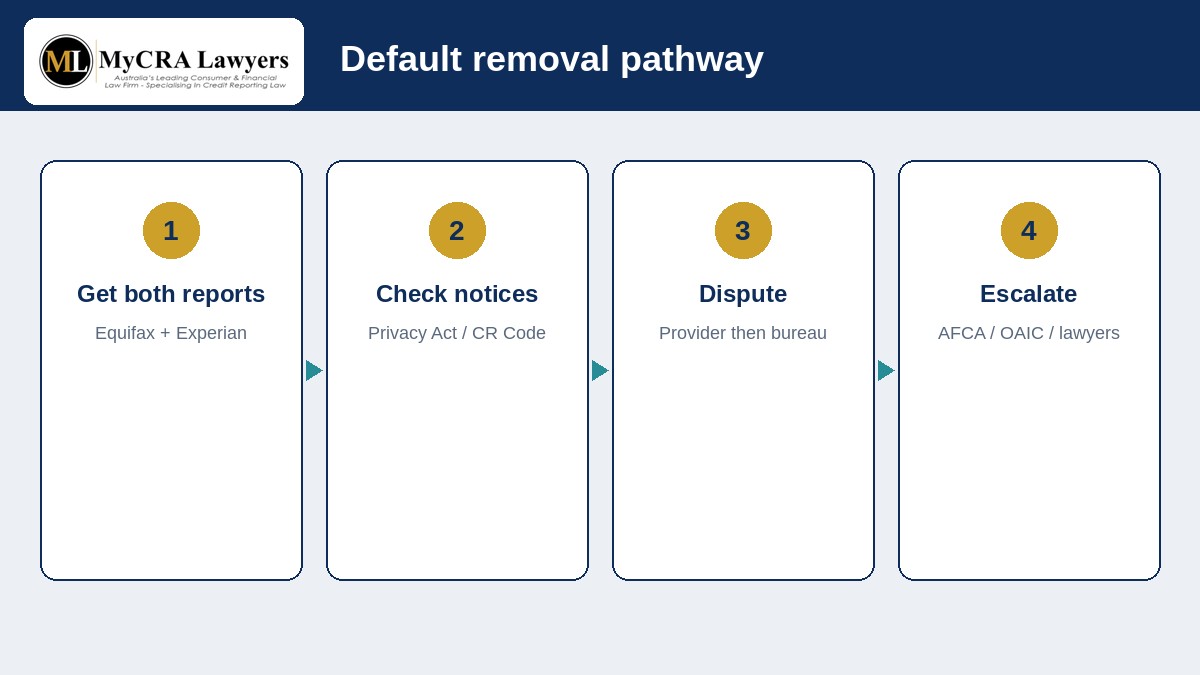
Australia’s consumer bureaus are Equifax and Experian (Experian includes former illion data from 1 April 2026). Correct the bureau where the information sits, and the provider who disclosed it. Fixing one file while ignoring the other is how declines keep happening. For the full process, see our guide on how to remove a default from your credit file.
How to make a correction request that gets read
- Identify the exact listing (creditor, date, amount, bureau).
- State what is wrong and what you want changed.
- Attach evidence: statements, notices (or proof of non-receipt), hardship emails, ID documents, court documents if relevant.
- Ask for a written outcome and diary the investigation window under the Credit Reporting Code.
- If stalled, escalate, AFCA for eligible firms, OAIC for privacy complaints.
Keep the tone factual. Anger feels good; exhibits win.
What creditors sometimes get wrong
- Treating a dispute as a complaint about “wanting a better score”
- Ignoring address-for-notice issues after a move
- Updating internal systems but not the CRB disclosure
- Assuming payment equals deletion
- Sending a template “we followed our process” letter without addressing your evidence
Your letter should keep them on the statutory rails: accuracy, completeness, relevance, and process. Judgments work differently, and we cover them in how to remove a court judgment from your credit file.
Free access still matters
You cannot correct what you have not seen. OAIC guidance: a credit reporting body must give you a free consumer credit report once every three months, with additional free access after a refusal within 90 days or after a correction. Guide: free credit reports.
Free analysis if you want a structured pass first: app.fixmybadcredit.com.au.
On consumer defaults accepted after initial assessment, our success rate is 91.6%, independently audited by a chartered accountant. Our own records show 29.4% of defaults are removed within 7 days. Fixed fees quoted before you start. Selected matters include a Money Back Guarantee on the published terms.
Don’t spend another month stuck in Credit Prison. Call our credit repair lawyers on 1300 667 218 or book a 15-minute intro call at https://mycralawyers.com.au/15min-credit-repair-intro-call/ . If we think your chances are low, we’ll tell you straight.
Timeframes and follow-up discipline
Correction requests die in inboxes when nobody diaries them. Put a reminder at the Credit Reporting Code investigation window. If the response is vague, write back quoting the unanswered points. Escalation works better when you can show a clean paper trail of unanswered specifics.
If a credit provider says the listing is correct, ask them to explain how the notice requirements were met. “Our process was followed” without dates and methods is not an explanation. Stay polite. Stay precise.
When to bring in a lawyer
Bring help when the provider stonewalls, the facts are contested, multiple listings interact, or a lending deadline makes delay expensive. A specialist firm can pressure-test the compliance story and run the next formal steps. That is different from paying someone to mail the same template weekly.
After a successful correction
Re-pull both bureau files. Confirm the change landed where lenders will see it. Tell your broker. Then wait a beat before new applications so you are not testing the file with a fresh hard enquiry on the same afternoon the correction posts.
What “creditor obligations” look like in a dispute
Credit providers who disclose information to bureaus have duties around accuracy and correction processes under the Privacy Act framework and the Credit Reporting Code. When a listing is wrong, a clear written request with evidence forces them onto a clock. Vague phone chats do not.
- Identify the discloser on both PDFs
- State what is wrong and what correction you want
- Attach proof and diary response timeframes
- Escalate to AFCA (if a member) or seek advice if they stall
Dispute letter structure · cornerstone.
Equifax and Experian: always both
Australia’s consumer credit reporting bodies are Equifax and Experian. Experian absorbed illion’s consumer bureau from 1 April 2026, so you do not need a separate illion report today. Scores rarely match. Free consumer reports are available every three months (OAIC). After a refusal, ask about free access tied to that decision. Save PDFs, not only score dials.
A simple cleanup order
- Identity and contact data
- Defaults and serious credit infringements
- Judgments
- Enquiries
- Repayment history information
- Hardship flags
Dispute clear errors before you generate new hard enquiries. For broker deals, pause lodgement until the triage is honest. Use app.fixmybadcredit.com.au for a free file analysis once you have the PDFs.
Putting it into practice this month
Start with both free Equifax and Experian consumer credit reports. Under OAIC guidance you can access a free consumer credit report from each credit reporting body once every three months, and you should also ask about free access after a credit refusal or after a correction. Save the PDFs. Compare identity details, defaults, serious credit infringements, judgments, enquiries and repayment history information side by side.
Next, write a dated chronology for anything that looks wrong: notices received or not received, hardship emails, payments, address changes, and collector contact. Send a clear written dispute to the credit provider that disclosed the information, attach your evidence, and diary the response timeframes under the Privacy (Credit Reporting) Code. Use the bureau dispute process where required. If the firm is an AFCA member and internal dispute resolution fails, AFCA is free for eligible consumers. OAIC pathways may fit some credit reporting privacy complaints. The National Debt Helpline on 1800 007 007 remains available for budgeting and hardship conversations.
If a broker deadline is close, a judgment or clearout is involved, or the creditor contests the facts, get a legal triage rather than spraying new hard enquiries across lenders. Email docs@mycralawyers.com.au, call 1300 667 218, or book a 15-minute intro call. Read the full framework on our credit repair lawyers Australia cornerstone. On consumer defaults accepted after initial assessment, our success rate is 91.6%, independently audited by a chartered accountant. Our own records show 29.4% of defaults are removed within 7 days. Fixed fees in writing. Selected matters include a Money Back Guarantee on published terms. Postal address: PO Box 169, Aspley QLD 4034.
FAQ
Can a creditor refuse to look at my dispute?
They have statutory correction obligations. Escalate if ignored.
Is AFCA free?
For eligible complaints, yes for consumers.
Do I need both bureau files?
Yes.
What if the debt is real but the listing is wrong?
Challenge listing compliance and accuracy separately from repayment strategy.
Where do I send documents to MyCRA?
docs@mycralawyers.com.au
This is general information, not legal advice. Liability limited by a scheme approved under Professional Standards Legislation.
MyCRA Lawyers | Australia-wide | 1300 667 218 | docs@mycralawyers.com.au | PO Box 169, Aspley QLD 4034





Leave A Comment