
Updated 8 October 2026. By Graham Doessel.
Hardship help can leave a long shadow on your credit file. Under comprehensive credit reporting, late marks can appear when payments are overdue (commonly discussed around the 14-day late threshold for RHI). Asking for hardship help early under the National Credit Code can change outcomes. A default listed while a genuine hardship request was on foot may be challengeable depending on the facts. Get free Equifax and Experian reports every three months, keep your hardship emails, and do not ignore bureau listings until you are “back on your feet”.
Hi, I’m Graham. Most people we help are good, honest Australians who hit a bit of chaos, hours cut, illness, a business shock, and then discover the credit file still has them in Credit Prison years later. Hardship conversations with lenders are not weakness. Silence is what feeds defaults.
How hardship hits the credit file
Modern Australian credit files carry more than old-style defaults. Repayment history information can show monthly payment conduct. Financial hardship information may also appear where arrangements exist. Defaults and judgments are the heavier listings if the account tips over.
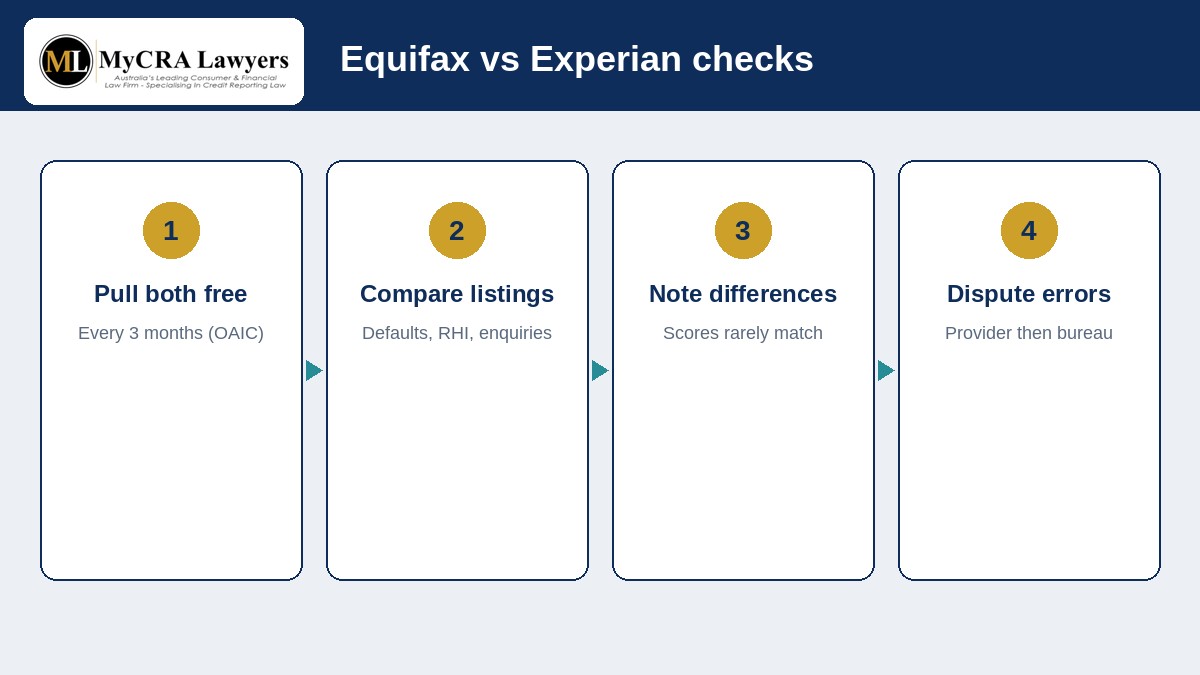
Pull both current bureaus: Equifax and Experian. From 1 April 2026 Experian’s consumer report includes data previously held by illion. Free access every three months is confirmed by the OAIC.
The late-payment mark (RHI)
If you are late on a consumer credit account that reports RHI, a late mark can land on the file. One mark is annoying. A pattern of late marks can sink a home-loan assessment even when there is no default yet. See repayment history information.
Ask for hardship early
Contact the credit provider as soon as you know you cannot meet repayments. Most regulated lenders have hardship obligations under the National Credit Code. Put the request in writing. Keep the emails. Ask what will be reported to the bureaus while an arrangement is in place.
Hardship may be relevant if you have lost work, had hours cut, faced illness or injury, suffered a business downturn, or had a sudden family change. Your story needs evidence, not vibes.
When a default during hardship may be challengeable
If you asked for hardship help and a default still appeared, the listing may be open to scrutiny under Privacy Act Part IIIA / Credit Reporting Code rules and the provider’s hardship handling. Outcomes turn on notices, timing, and what was agreed. That is audit work, not a slogan. Service page: default removal. Cornerstone: credit repair lawyers Australia.
What to do this week
- Download free Equifax and Experian reports.
- Highlight RHI late marks, hardship flags, defaults and judgments.
- Export every hardship email and arrangement letter to one folder.
- Stop fresh credit applications until you know what lenders will see.
- Use free supports too: National Debt Helpline 1800 007 007; AFCA for eligible complaints; OAIC for credit reporting privacy issues.
Or start a free credit file analysis at app.fixmybadcredit.com.au.
When MyCRA gets involved
We review hardship-related listings with the same compliance lens we use on defaults and enquiries. On consumer defaults accepted after initial assessment, our success rate is 91.6%, independently audited by a chartered accountant. Our own records show 29.4% of defaults are removed within 7 days. Fixed fees quoted before you start. Selected matters include a Money Back Guarantee on the published terms. If you want the detail first, read how it works.
Don’t spend another month stuck in Credit Prison. Call our credit repair lawyers on 1300 667 218 or book a 15-minute intro call at https://mycralawyers.com.au/15min-credit-repair-intro-call/ . If we think your chances are low, we’ll tell you straight.
Hardship, RHI and defaults can stack
Asking for hardship help is often the right move for cashflow. It can still leave marks: financial hardship information, repayment history grids, or, if process goes wrong, a default listed while discussions were on foot. Read the labels on both bureau PDFs carefully. Not every negative line is a default. For the full process, see our guide on how to remove a default from your credit file.
Keep hardship emails, portal acknowledgements, and any agreed variation. If a default appeared during that window, the chronology is exhibit A in a dispute or AFCA lodge. If you are wondering whether to wait it out, read how long a default stays on your credit file.
What lenders infer
Some lenders read recent hardship as elevated risk even after you recover. Others will proceed with context. Silence helps nobody. Tell the broker early, and pause spray applications while the file is unstable.
Related: RHI, default listed during hardship, and our cornerstone.
Putting it into practice this month
Start with both free Equifax and Experian consumer credit reports. Under OAIC guidance you can access a free consumer credit report from each credit reporting body once every three months, and you should also ask about free access after a credit refusal or after a correction. Save the PDFs. Compare identity details, defaults, serious credit infringements, judgments, enquiries and repayment history information side by side.
Next, write a dated chronology for anything that looks wrong: notices received or not received, hardship emails, payments, address changes, and collector contact. Send a clear written dispute to the credit provider that disclosed the information, attach your evidence, and diary the response timeframes under the Privacy (Credit Reporting) Code. Use the bureau dispute process where required. If the firm is an AFCA member and internal dispute resolution fails, AFCA is free for eligible consumers. OAIC pathways may fit some credit reporting privacy complaints. The National Debt Helpline on 1800 007 007 remains available for budgeting and hardship conversations.
If a broker deadline is close, a judgment or clearout is involved, or the creditor contests the facts, get a legal triage rather than spraying new hard enquiries across lenders. Email docs@mycralawyers.com.au, call 1300 667 218, or book a 15-minute intro call. Read the full framework on our credit repair lawyers Australia cornerstone. On consumer defaults accepted after initial assessment, our success rate is 91.6%, independently audited by a chartered accountant. Our own records show 29.4% of defaults are removed within 7 days. Fixed fees in writing. Selected matters include a Money Back Guarantee on published terms. Postal address: PO Box 169, Aspley QLD 4034.
FAQ
Does asking for hardship hurt my credit score?
Hardship arrangements and financial hardship information can appear on credit reporting information. Waiting until a default lists usually hurts more. Ask early and keep records of what will be reported.
How often can I get a free credit report?
A credit reporting body must give you a free consumer credit report once every three months (OAIC). Extra free access can apply after a refusal within 90 days or after a correction.
Can RHI late marks be disputed?
Sometimes, if the reporting is inaccurate or you had arrangements that were not reflected correctly. Many accurate late marks are not removable just because they are inconvenient.
Should I still pay something during hardship?
Follow the written arrangement you agree with the lender. Paying randomly without an agreement can still leave late marks and confusion.
Is illion still a separate bureau?
No. Experian absorbed illion’s consumer credit bureau. From 1 April 2026, request Experian for the combined file, plus Equifax.
This is general information, not legal advice. Hardship rights depend on the product and provider. Liability limited by a scheme approved under Professional Standards Legislation.
MyCRA Lawyers | Australia-wide | 1300 667 218 | docs@mycralawyers.com.au | PO Box 169, Aspley QLD 4034


Leave A Comment