
Updated 10 October 2026. By Graham Doessel.
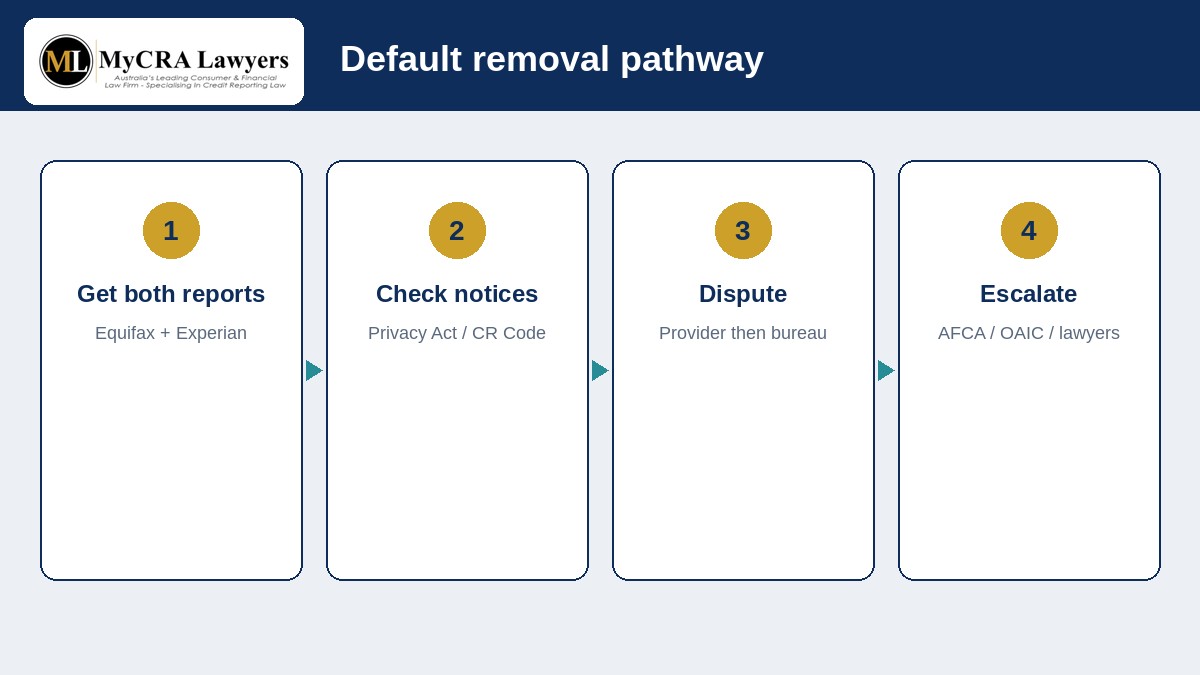
Paying an unpaid default does not automatically wipe the listing. Paying the debt does not automatically delete a default, and refusing to pay does not automatically make removal impossible. Compliance drives lawful removal. Get free Equifax and Experian reports every three months, check the listing details, dispute in writing, then escalate to AFCA or OAIC if needed.
Hi, I’m Graham. The biggest myth in Credit Prison is “pay it and it disappears.” The second biggest is “if it’s unpaid, you’re stuck forever.” Both are wrong often enough to ruin home-loan timelines.
Payment status vs compliance
Credit reporting rules care whether the credit provider followed Part IIIA of the Privacy Act, the Privacy (Credit Reporting) Code, and (for many consumer credit products) National Credit Code notice rules. Paid or unpaid is a status field. It is not a magic delete button. See default removal and credit repair lawyers Australia.
What to check on an unpaid default
- Were prior notices and default notices given correctly?
- Was the account far enough overdue, and was the amount at the consumer default threshold?
- Is the amount and account yours?
- Were you in a hardship request when it listed?
- Does it appear on Equifax, Experian, or both? (Experian includes former illion data from 1 April 2026.)
DIY then escalate
- Pull both free reports.
- Write to the credit provider with evidence.
- Use the bureau correction process where required.
- AFCA for eligible firms (free for consumers); OAIC for privacy complaints.
- Get legal help if the creditor digs in or a loan deadline is close.
Free analysis: app.fixmybadcredit.com.au.
On consumer defaults accepted after initial assessment, our success rate is 91.6%, independently audited by a chartered accountant. Our own records show 29.4% of defaults are removed within 7 days. Fixed fees quoted before you start. Selected matters include a Money Back Guarantee on the published terms.
Don’t spend another month stuck in Credit Prison. Call our credit repair lawyers on 1300 667 218 or book a 15-minute intro call at https://mycralawyers.com.au/15min-credit-repair-intro-call/ . If we think your chances are low, we’ll tell you straight.
Unpaid does not mean “impossible”
An unpaid default is often harder on lending optics than a paid one, but removal still turns on compliance and accuracy, not on whether the balance is open. Defective notices, wrong amounts, wrong person, or listing during mishandled hardship can all matter. Paying may help some scorecards; it does not automatically delete the listing. If you are wondering whether to wait it out, read how long a default stays on your credit file.
Practical sequence
- Pull Equifax and Experian (free every three months)
- Audit notices, thresholds and identity
- Decide dispute vs commercial settlement with eyes open
- Update both bureaus after any settlement letter
- Avoid new hard enquiries while the fight runs
Guides: paid vs unpaid, 2026 default removal, default removal service.
Equifax and Experian: always both
Australia’s consumer credit reporting bodies are Equifax and Experian. Experian absorbed illion’s consumer bureau from 1 April 2026, so you do not need a separate illion report today. Scores rarely match. Free consumer reports are available every three months (OAIC). After a refusal, ask about free access tied to that decision. Save PDFs, not only score dials. Judgments work differently, and we cover them in how to remove a court judgment from your credit file.
A simple cleanup order
- Identity and contact data
- Defaults and serious credit infringements
- Judgments
- Enquiries
- Repayment history information
- Hardship flags
Dispute clear errors before you generate new hard enquiries. For broker deals, pause lodgement until the triage is honest. Use app.fixmybadcredit.com.au for a free file analysis once you have the PDFs.
What “good enough” looks like before you apply
You do not need a perfect file. You need an honest map of what lenders will see on Equifax and Experian, a plan for anything non-compliant or incorrect, and enough discipline to stop adding hard enquiries while that plan runs. Brokers would rather wait two weeks for a clean story than inherit four declines.
If a listing is lawful and must age, say so early. If it is challengeable, gather notices and chronologies before you phone the creditor angry. Measured files get better outcomes than chaotic ones.
Internal links worth keeping open: free credit reports, default removal guide, and the credit repair lawyers Australia cornerstone.
Free reports are the starting line
Under Australian credit reporting rules, a credit reporting body must give you a free consumer credit report once every three months (OAIC). You can also seek free access after a credit refusal within the past 90 days, or after a correction. Get Equifax and Experian. Experian absorbed illion’s consumer bureau from 1 April 2026, treat illion as history, not a current third bureau you must pull separately.
Store PDFs somewhere durable. Portal links expire. Score dials without listings are not enough for a dispute or a broker pack.
Putting it into practice this month
Start with both free Equifax and Experian consumer credit reports. Under OAIC guidance you can access a free consumer credit report from each credit reporting body once every three months, and you should also ask about free access after a credit refusal or after a correction. Save the PDFs. Compare identity details, defaults, serious credit infringements, judgments, enquiries and repayment history information side by side.
Next, write a dated chronology for anything that looks wrong: notices received or not received, hardship emails, payments, address changes, and collector contact. Send a clear written dispute to the credit provider that disclosed the information, attach your evidence, and diary the response timeframes under the Privacy (Credit Reporting) Code. Use the bureau dispute process where required. If the firm is an AFCA member and internal dispute resolution fails, AFCA is free for eligible consumers. OAIC pathways may fit some credit reporting privacy complaints. The National Debt Helpline on 1800 007 007 remains available for budgeting and hardship conversations. We explain how our process works before you commit to anything.
If a broker deadline is close, a judgment or clearout is involved, or the creditor contests the facts, get a legal triage rather than spraying new hard enquiries across lenders. Email docs@mycralawyers.com.au, call 1300 667 218, or book a 15-minute intro call. Read the full framework on our credit repair lawyers Australia cornerstone. On consumer defaults accepted after initial assessment, our success rate is 91.6%, independently audited by a chartered accountant. Our own records show 29.4% of defaults are removed within 7 days. Fixed fees in writing. Selected matters include a Money Back Guarantee on published terms. Postal address: PO Box 169, Aspley QLD 4034.
FAQ
Can an unpaid default be removed?
It may be removable if the listing process was non-compliant or the information is inaccurate. Payment status alone does not decide it.
Should I pay before disputing?
It depends on lending goals, statute issues and negotiation strategy. Get the file facts first.
How long does an unpaid default stay?
Consumer defaults are commonly retained for five years from listing under credit reporting rules. Confirm dates on your reports.
Do I need both Equifax and Experian?
Yes. Listings can differ across the two current bureaus.
What if DIY stalls?
AFCA, OAIC, or a specialist credit repair law firm for a compliance audit.
This is general information, not legal advice. Liability limited by a scheme approved under Professional Standards Legislation.
MyCRA Lawyers | Australia-wide | 1300 667 218 | docs@mycralawyers.com.au | PO Box 169, Aspley QLD 4034


Leave A Comment