
Updated 14 October 2026. By Graham Doessel.
Australians facing a damaged file usually have three paths, not one. Ignore guaranteed score lifts and mystery success rates. Prefer fixed fees in writing, independently audited results, both-bureau coverage (Equifax and Experian), and operators who will tell you when prospects are low.
Hi, I’m Graham. The market is noisy. Your job is to pick the path that matches the mess on your files, not the loudest Facebook ad. Credit Prison does not care how many webinars you watched.
Step zero: see both files
Before you choose a repair path, get free consumer credit reports from Equifax and Experian. A credit reporting body must give you a free report once every three months (OAIC). Extra free access can apply after a credit refusal within 90 days or after a correction. Experian includes former illion consumer data from 1 April 2026. How-to: free credit report guide.
If you only check one monitoring app score, you are guessing. Lenders underwrite listings, not vanity dials.
Option 1: DIY dispute
Write to the credit provider that disclosed the information. Attach evidence. Ask for correction under the Privacy Act framework. Use the bureau dispute route where required. This works best for clear identity errors, obvious duplicates, or notices you can prove were never given. Keep copies of everything. Diary response dates.
Option 2: Free escalation rails
- AFCA: free for consumers for eligible financial firms
- OAIC: credit reporting privacy complaints
- National Debt Helpline 1800 007 007: hardship and budgeting, not listing law
Honest operators tell you about these rails even when they hope you will hire them later. If someone mocks free options, that is a red flag.
Option 3: Specialist credit repair law firm
Choose this when DIY stalls, the creditor contests the facts, multiple listing types interact (default + enquiries + RHI), or a lending deadline is tight. A law practice can advise and act in ways a non-law letter mill cannot. Framework: credit repair lawyers Australia. Fees: how much is credit repair. Hiring questions: seven questions before you hire.
On consumer defaults accepted after initial assessment, our success rate is 91.6%, independently audited by a chartered accountant. Our own records show 29.4% of defaults are removed within 7 days. Fixed fees quoted before you start. Selected matters include a Money Back Guarantee on the published terms.
Option 4: Free credit file analysis first
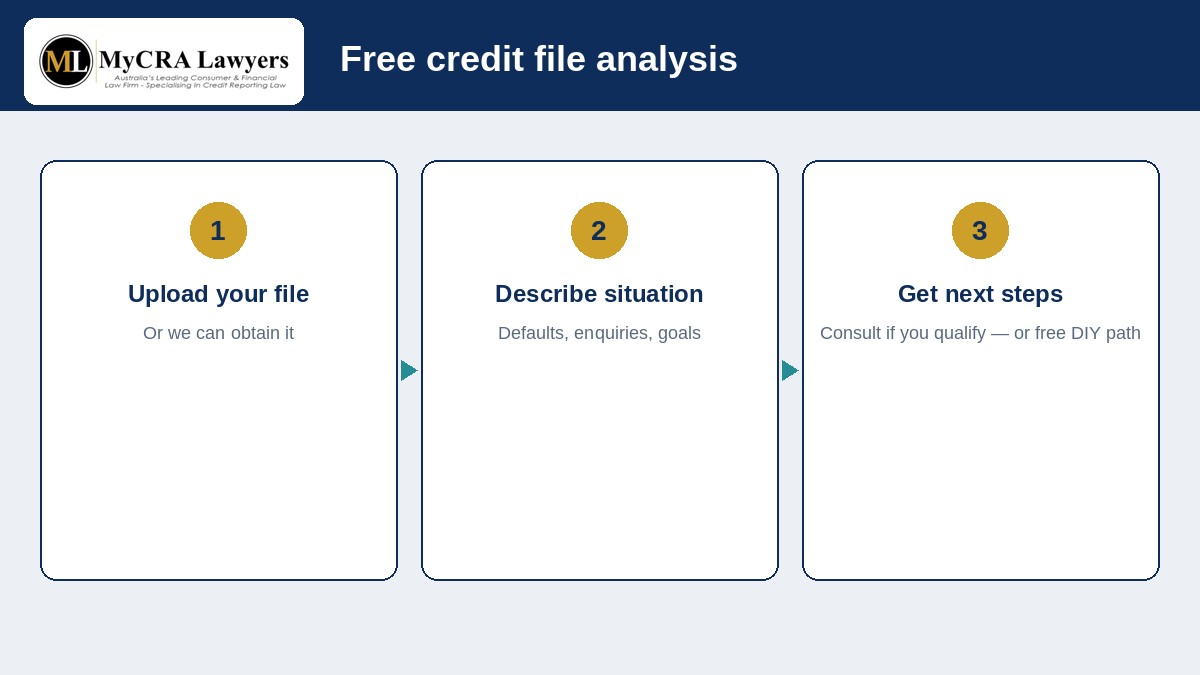
If you already have PDFs (or need help obtaining them), start at app.fixmybadcredit.com.au. Upload the file that shows the problem, answer a few situation questions, and get plain-English next steps. If you do not qualify for legal help, you still leave with free DIY direction. That sequence, see the file, get a read, then decide, beats paying for a package you do not understand.
What to avoid
- Guaranteed removals or guaranteed score numbers
- Pressure to sign before you see the listings
- Operators who only talk about one app score
- Paying for “monitoring” and calling it repair
- Street-corner success stories with no audit certificate
A simple decision rule
If the error is obvious and documented, DIY first. If the creditor is fighting, the notices are messy, or a home loan is on a clock, get a specialist read. Either way, stop adding hard enquiries while you decide.
Don’t spend another month stuck in Credit Prison. Call our credit repair lawyers on 1300 667 218 or book a 15-minute intro call at https://mycralawyers.com.au/15min-credit-repair-intro-call/ . If we think your chances are low, we’ll tell you straight.
How to compare operators without getting sold
Ask for a sample of how they explain a non-compliant default versus a compliant one. Ask whether they work Equifax and Experian. Ask for the audited success definition in writing. Ask what happens if prospects are low. If the answers are all vibes and urgency, leave. For the full process, see our guide on how to remove a default from your credit file.
Also compare cost models honestly. A cheap letter pack that fails still costs you months and fresh enquiries. A fixed-fee legal audit that says “don’t proceed” can be the highest-value spend of the year. See why choose MyCRA for how we frame that conversation.
Where brokers fit in
If a mortgage is the goal, loop your broker in early. They know which panel lenders will even look at a file with a recent default or enquiry cluster. Repair work and broker strategy should run in parallel, not as rival religions.
A one-week action plan
Day 1–2: free Equifax and Experian reports. Day 3: free analysis upload. Day 4: DIY letters on anything obvious. Day 5: book an intro call if the file is contested or time-critical. That beats a month of scrolling ads.
Three paths most Australians actually have
- DIY dispute: clear errors, time on your side, patience for IDR
- AFCA / OAIC: member firms or privacy pathways after provider steps
- Specialist law firm: contested facts, judgments, broker deadlines, non-members
Pick the path that matches the file, not the loudest ad. Free reports every three months keep you honest about what needs work.
DIY vs lawyer · AFCA vs OAIC · cornerstone.
Putting it into practice this month
Start with both free Equifax and Experian consumer credit reports. Under OAIC guidance you can access a free consumer credit report from each credit reporting body once every three months, and you should also ask about free access after a credit refusal or after a correction. Save the PDFs. Compare identity details, defaults, serious credit infringements, judgments, enquiries and repayment history information side by side.
Next, write a dated chronology for anything that looks wrong: notices received or not received, hardship emails, payments, address changes, and collector contact. Send a clear written dispute to the credit provider that disclosed the information, attach your evidence, and diary the response timeframes under the Privacy (Credit Reporting) Code. Use the bureau dispute process where required. If the firm is an AFCA member and internal dispute resolution fails, AFCA is free for eligible consumers. OAIC pathways may fit some credit reporting privacy complaints. The National Debt Helpline on 1800 007 007 remains available for budgeting and hardship conversations. You can see how we repair credit, step by step.
If a broker deadline is close, a judgment or clearout is involved, or the creditor contests the facts, get a legal triage rather than spraying new hard enquiries across lenders. Email docs@mycralawyers.com.au, call 1300 667 218, or book a 15-minute intro call. Read the full framework on our credit repair lawyers Australia cornerstone. On consumer defaults accepted after initial assessment, our success rate is 91.6%, independently audited by a chartered accountant. Our own records show 29.4% of defaults are removed within 7 days. Fixed fees in writing. Selected matters include a Money Back Guarantee on published terms. Postal address: PO Box 169, Aspley QLD 4034.
FAQ
Is DIY enough?
Sometimes for clear errors. Contested or multi-issue files often need more.
Are score apps credit repair?
No. They monitor trends; disputes need full report detail and a process.
What success rate should I trust?
Independently audited and clearly defined. Ask for the certificate.
Do I need both bureaus?
Yes, Equifax and Experian.
How do I start with MyCRA?
Free analysis or a 15-minute intro call.
This is general information, not legal advice. Liability limited by a scheme approved under Professional Standards Legislation.
MyCRA Lawyers | Australia-wide | 1300 667 218 | docs@mycralawyers.com.au | PO Box 169, Aspley QLD 4034

Leave A Comment