
Updated 13 October 2026. By Graham Doessel.
Even a correctly listed default may have removal pathways in limited cases. Genuineness of the debt is not the same as lawfulness of the listing. Paying may help a lending conversation; it does not automatically delete the default. Start with free Equifax and Experian reports every three months, then audit notices, timing, amounts and hardship handling.
Hi, I’m Graham. Clients tell me “but I did owe it” as if that ends the conversation. It does not. Credit Prison is often built from shortcuts on notices, not from fake debts. I have seen people pay in full, celebrate, then discover the listing still sitting there five years later like nothing happened.
Genuine debt, defective listing
Credit reporting is regulated for a reason. Credit providers must follow rules before and when they list certain information with a credit reporting body. If those rules were not followed, the information may be open to correction even though money was owed. That distinction sits at the centre of specialist credit repair legal work. See default removal and the credit repair lawyers Australia cornerstone.
The opposite myth is just as damaging: “If it’s unpaid, removal is impossible.” Payment status is a field on the listing. Compliance is the legal question. An unpaid default listed without the required process can still be challengeable. A paid default listed lawfully can still sit for its retention period. If you are wondering whether to wait it out, read how long a default stays on your credit file.
What “genuine” usually means in client language
People say genuine when they mean: I recognise the creditor, I fell behind, I am not claiming identity fraud. Fair enough. That still leaves open questions about National Credit Code default notices (for many consumer credit products), Privacy Act prior notice and 14-day notice requirements, amount thresholds, overdue timing, and whether hardship was on foot. Those are document questions, not character questions.
Checklist for a genuine default
- Were prior notices and default notices given correctly, to the right address?
- Was the account far enough overdue, and was the amount at the consumer default threshold that applied at listing?
- Is the amount and account actually yours, with no identity mix-up?
- Were you in a hardship request when it listed?
- Does it appear on Equifax, Experian, or both? (Experian includes former illion data from 1 April 2026.)
- Are the listed dates consistent with your statements?
Paid vs unpaid: what actually changes
Paying can matter for how a lender’s policy engine treats the file, and it can matter in negotiations with the creditor. It does not rewrite history on the notices. If a broker says “just pay it and we’ll try again,” ask whether anyone has checked the listing process. Otherwise you may spend money and still wear the same default for years.
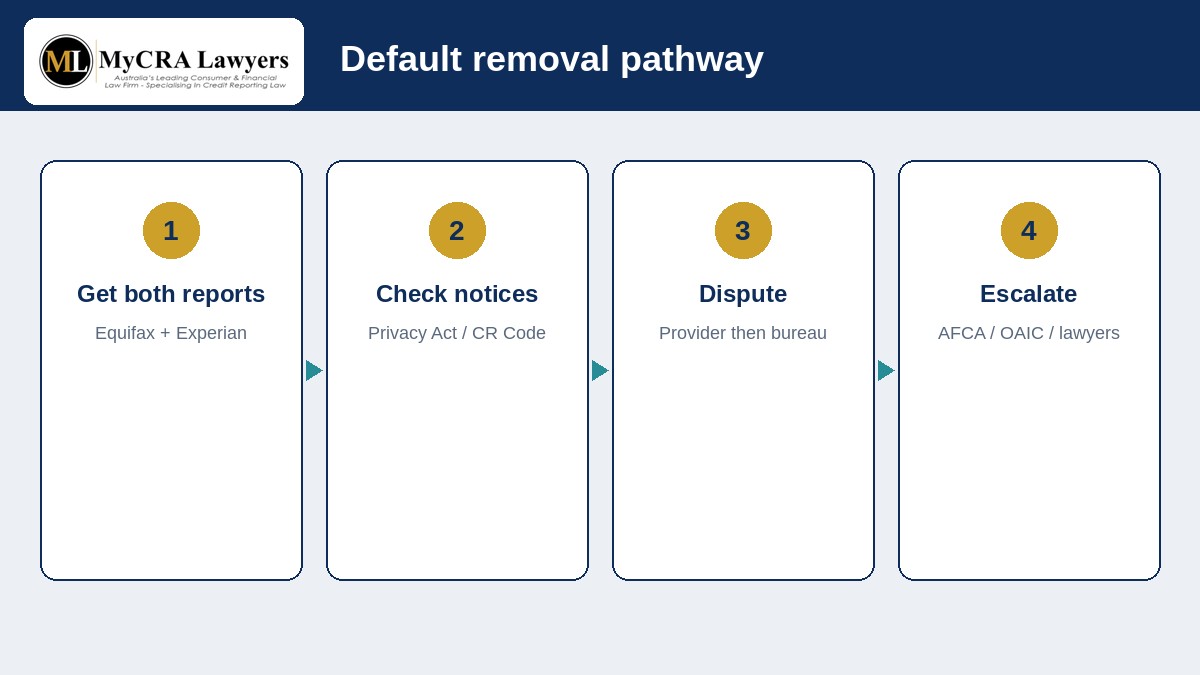
DIY pathway, then escalate
- Download both free bureau reports (every three months under OAIC guidance; also after a refusal within 90 days).
- Write to the credit provider with a clear correction request and evidence pack.
- Use the bureau process where required and diary Credit Reporting Code investigation windows.
- Escalate to AFCA for eligible firms (free for consumers) or the OAIC for privacy complaints.
- Get legal help when the creditor digs in, the notice trail is contested, or a loan deadline is close.
Free analysis: app.fixmybadcredit.com.au. Related: unpaid defaults.
When MyCRA gets involved
We audit the listing process, not your character. On consumer defaults accepted after initial assessment, our success rate is 91.6%, independently audited by a chartered accountant. Our own records show 29.4% of defaults are removed within 7 days. Fixed fees quoted before you start. Selected matters include a Money Back Guarantee on the published terms. Our credit repair process is set out in plain English.
Don’t spend another month stuck in Credit Prison. Call our credit repair lawyers on 1300 667 218 or book a 15-minute intro call at https://mycralawyers.com.au/15min-credit-repair-intro-call/ . If we think your chances are low, we’ll tell you straight.
Common genuine-default scenarios we see
Telco and energy defaults after a move where notices went to an old address. Buy-now-pay-later accounts that escalated while the client was dealing with illness. Credit cards that were “sorted with a hardship team” on the phone with nothing in writing. School fee and private education accounts that jumped straight to listing. In each case the debt may be real and the listing still worth auditing.
Another pattern: the client paid a debt collector months ago and assumed the bureau update was automatic. Paid status and deletion are different outcomes. Always re-pull Equifax and Experian after any settlement and keep the receipt trail.
Evidence pack that actually helps
Bank statements covering the overdue period. Change-of-address records. Hardship emails and portal screenshots. Any default notice you did receive (and the envelope date if you still have it). A timeline in bullet points beats a three-page emotional essay. AFCA and creditors respond to chronology.
Genuine vs non-compliant: the fork in the road
A “genuine” default (debt owed, thresholds met, notices in order) is harder to remove early. That does not mean you skip the audit. Amounts, addresses, hardship handling and identity still deserve a slow read. If the listing is compliant, the honest conversation may be wait-out plus rebuilding, not a miracle wipe.
If notices failed or the person/amount is wrong, treat it as a compliance file. Paying alone still does not erase history.
Notice requirements · removal guide.
Putting it into practice this month
Start with both free Equifax and Experian consumer credit reports. Under OAIC guidance you can access a free consumer credit report from each credit reporting body once every three months, and you should also ask about free access after a credit refusal or after a correction. Save the PDFs. Compare identity details, defaults, serious credit infringements, judgments, enquiries and repayment history information side by side.
Next, write a dated chronology for anything that looks wrong: notices received or not received, hardship emails, payments, address changes, and collector contact. Send a clear written dispute to the credit provider that disclosed the information, attach your evidence, and diary the response timeframes under the Privacy (Credit Reporting) Code. Use the bureau dispute process where required. If the firm is an AFCA member and internal dispute resolution fails, AFCA is free for eligible consumers. OAIC pathways may fit some credit reporting privacy complaints. The National Debt Helpline on 1800 007 007 remains available for budgeting and hardship conversations.
If a broker deadline is close, a judgment or clearout is involved, or the creditor contests the facts, get a legal triage rather than spraying new hard enquiries across lenders. Email docs@mycralawyers.com.au, call 1300 667 218, or book a 15-minute intro call. Read the full framework on our credit repair lawyers Australia cornerstone. On consumer defaults accepted after initial assessment, our success rate is 91.6%, independently audited by a chartered accountant. Our own records show 29.4% of defaults are removed within 7 days. Fixed fees in writing. Selected matters include a Money Back Guarantee on published terms. Postal address: PO Box 169, Aspley QLD 4034.
FAQ
If I owed the money, am I stuck with the default?
Not necessarily. Listing compliance is a separate question from the underlying debt.
Should I pay before disputing?
It depends on lending goals, limitation issues and negotiation strategy. Get the file facts first.
How long do consumer defaults usually stay?
Commonly five years from listing under credit reporting retention rules, unless corrected earlier. Confirm dates on your reports.
DIY or lawyer?
DIY for clear documentary errors; escalate when contested or time-critical.
Where do I start?
Both free reports, then a free credit file analysis or intro call.
This is general information, not legal advice. Liability limited by a scheme approved under Professional Standards Legislation.
MyCRA Lawyers | Australia-wide | 1300 667 218 | docs@mycralawyers.com.au | PO Box 169, Aspley QLD 4034

Leave A Comment