
Updated 11 October 2026. By Graham Doessel.
RHI is the repayment history grid lenders read alongside defaults. Late marks can appear when consumer credit payments are overdue (commonly discussed around 14 days late). RHI can hurt home-loan assessments even without a default. Some marks may be disputable if inaccurate or inconsistent with hardship arrangements; many accurate late marks are not removable just because they are inconvenient. Check Equifax and Experian every three months.
Hi, I’m Graham. Brokers call me about RHI more than almost anything else these days. People obsess over one old default and miss twelve late marks sitting in plain sight.
What RHI shows
Where reported, RHI records whether monthly payments were on time or late for eligible consumer credit accounts. It sits alongside defaults, enquiries and personal details. Full explainer: repayment history information and credit repair lawyers Australia.
Hardship and RHI
If you had a hardship arrangement, keep the emails. Reporting that ignores an agreed arrangement can become a dispute issue. Ask early for hardship under the National Credit Code when you cannot pay, silence feeds late marks and defaults.
What to do
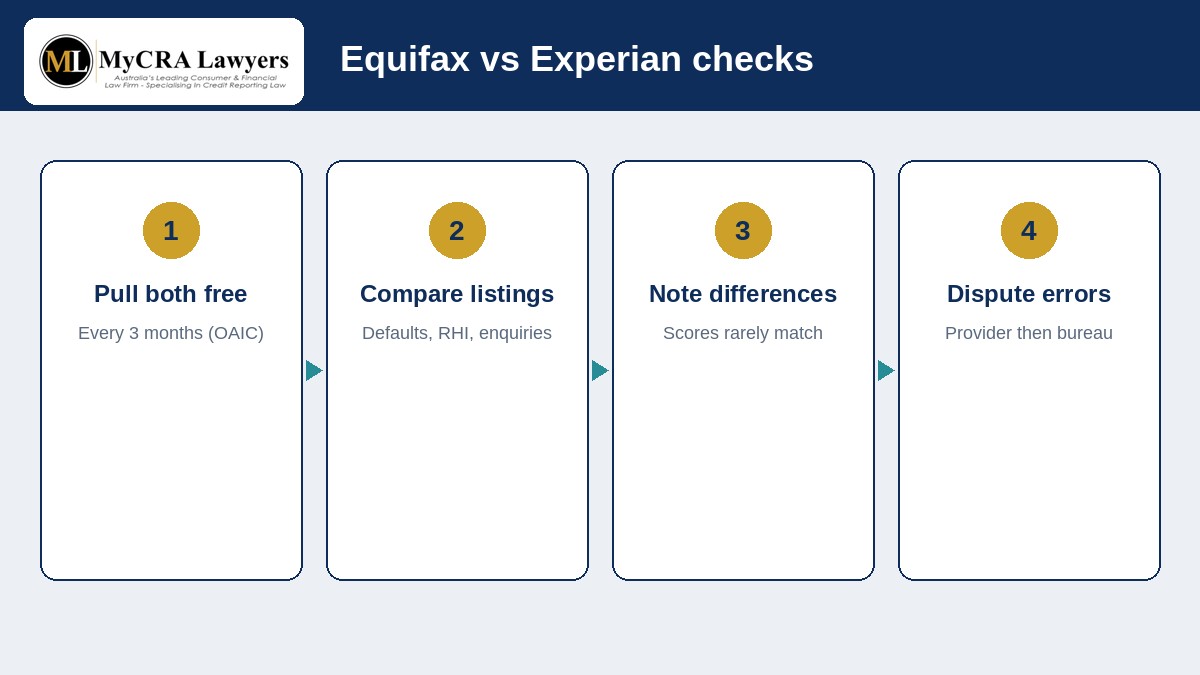
- Download free Equifax and Experian reports (every three months, OAIC).
- Map late marks month by month against bank statements and hardship letters.
- Dispute inaccuracies in writing with the credit provider and bureau process.
- Pause new applications until your broker knows the RHI picture.
Free analysis: app.fixmybadcredit.com.au.
On consumer defaults accepted after initial assessment, our success rate is 91.6%, independently audited by a chartered accountant. Our own records show 29.4% of defaults are removed within 7 days. Fixed fees quoted before you start. Selected matters include a Money Back Guarantee on the published terms.
Don’t spend another month stuck in Credit Prison. Call our credit repair lawyers on 1300 667 218 or book a 15-minute intro call at https://mycralawyers.com.au/15min-credit-repair-intro-call/ . If we think your chances are low, we’ll tell you straight.
How to read an RHI grid
Repayment history information shows month-by-month payment conduct on participating accounts. Late marks can hurt even without a default. Open the full Equifax and Experian PDFs, not only a score app, and screenshot the grids before you dispute.
- Match flagged months to bank statements
- Note hardship variations that should have changed reporting
- Watch for mixed-identity accounts
- Separate genuine late payments from posting errors
Genuine late payments usually age under credit reporting retention rules. Challengeable marks need evidence. Service page: RHI. Companion: fixing RHI late marks.
Equifax and Experian: always both
Australia’s consumer credit reporting bodies are Equifax and Experian. Experian absorbed illion’s consumer bureau from 1 April 2026, so you do not need a separate illion report today. Scores rarely match. Free consumer reports are available every three months (OAIC). After a refusal, ask about free access tied to that decision. Save PDFs, not only score dials.
A simple cleanup order
- Identity and contact data
- Defaults and serious credit infringements
- Judgments
- Enquiries
- Repayment history information
- Hardship flags
Dispute clear errors before you generate new hard enquiries. For broker deals, pause lodgement until the triage is honest. Use app.fixmybadcredit.com.au for a free file analysis once you have the PDFs.
What “good enough” looks like before you apply
You do not need a perfect file. You need an honest map of what lenders will see on Equifax and Experian, a plan for anything non-compliant or incorrect, and enough discipline to stop adding hard enquiries while that plan runs. Brokers would rather wait two weeks for a clean story than inherit four declines.
If a listing is lawful and must age, say so early. If it is challengeable, gather notices and chronologies before you phone the creditor angry. Measured files get better outcomes than chaotic ones.
Internal links worth keeping open: free credit reports, default removal guide, and the credit repair lawyers Australia cornerstone.
Free reports are the starting line
Under Australian credit reporting rules, a credit reporting body must give you a free consumer credit report once every three months (OAIC). You can also seek free access after a credit refusal within the past 90 days, or after a correction. Get Equifax and Experian. Experian absorbed illion’s consumer bureau from 1 April 2026, treat illion as history, not a current third bureau you must pull separately.
Store PDFs somewhere durable. Portal links expire. Score dials without listings are not enough for a dispute or a broker pack.
Common mistakes that keep people in Credit Prison
- Applying again the morning after a decline
- Paying a default because a collector said it would “come off”
- Hiring the loudest repair advert without checking fees or practising status
- Disputing by phone only and keeping no chronology
- Checking one bureau and assuming the other matches
- Ignoring RHI grids because there is no default yet
Most of those mistakes are fixable with process. Start with both free reports, then pick DIY, AFCA/OAIC, or a law firm based on evidence and deadlines, not panic.
Putting it into practice this month
Start with both free Equifax and Experian consumer credit reports. Under OAIC guidance you can access a free consumer credit report from each credit reporting body once every three months, and you should also ask about free access after a credit refusal or after a correction. Save the PDFs. Compare identity details, defaults, serious credit infringements, judgments, enquiries and repayment history information side by side.
Next, write a dated chronology for anything that looks wrong: notices received or not received, hardship emails, payments, address changes, and collector contact. Send a clear written dispute to the credit provider that disclosed the information, attach your evidence, and diary the response timeframes under the Privacy (Credit Reporting) Code. Use the bureau dispute process where required. If the firm is an AFCA member and internal dispute resolution fails, AFCA is free for eligible consumers. OAIC pathways may fit some credit reporting privacy complaints. The National Debt Helpline on 1800 007 007 remains available for budgeting and hardship conversations. See how a MyCRA file runs from first call to removal.
If a broker deadline is close, a judgment or clearout is involved, or the creditor contests the facts, get a legal triage rather than spraying new hard enquiries across lenders. Email docs@mycralawyers.com.au, call 1300 667 218, or book a 15-minute intro call. Read the full framework on our credit repair lawyers Australia cornerstone. On consumer defaults accepted after initial assessment, our success rate is 91.6%, independently audited by a chartered accountant. Our own records show 29.4% of defaults are removed within 7 days. Fixed fees in writing. Selected matters include a Money Back Guarantee on published terms. Postal address: PO Box 169, Aspley QLD 4034.
FAQ
Does RHI stay forever?
RHI has its own retention rules under the Credit Reporting Code. Check the dates and codes on your actual reports.
Can late marks be removed?
Sometimes if wrong or non-compliant. Accurate late marks often remain.
Is RHI on both Equifax and Experian?
It can differ. Pull both. Experian includes former illion data from 1 April 2026.
Does hardship stop RHI?
It depends what was agreed and reported. Get arrangements in writing.
Where do I start?
Free reports, then a free credit file analysis or intro call.
This is general information, not legal advice. Liability limited by a scheme approved under Professional Standards Legislation.
MyCRA Lawyers | Australia-wide | 1300 667 218 | docs@mycralawyers.com.au | PO Box 169, Aspley QLD 4034

Leave A Comment