
Updated 28 November 2026. By Graham Doessel.
Short answer
One overdue debt should not turn into two defaults. When a lender sells or transfers a debt it has already listed, the Credit Reporting Code treats the buyer as stepping into the lender’s shoes. The transfer has to be reported to the bureau within 45 days, with the new owner’s name, and the buyer is treated as having made the original listing. The amount can be updated for interest and fees, but the original listing date stays the date the five-year clock runs from. So a second default for the same debt, or a “new” default with a later date, is worth checking. Ask in writing for the duplicate to be removed. Before you do, make sure it really is the same debt, and not the same default showing on both Equifax and Experian, which is normal.
Hi, I’m Graham. This one makes people furious, and fair enough. They had one phone bill go bad years ago. Now their credit file shows the telco’s default and a collector’s default for what looks like the same money. Two black marks for one debt.
Sometimes it’s a genuine duplicate. Sometimes it isn’t. Here’s how to tell.
What happens to a default when a debt is sold?
Lenders often sell old debts to debt buyers, or pass them to collectors. The Credit Reporting Code has a rule for when someone takes over the right to be repaid on a consumer credit debt that already has a default listed. In plain English:
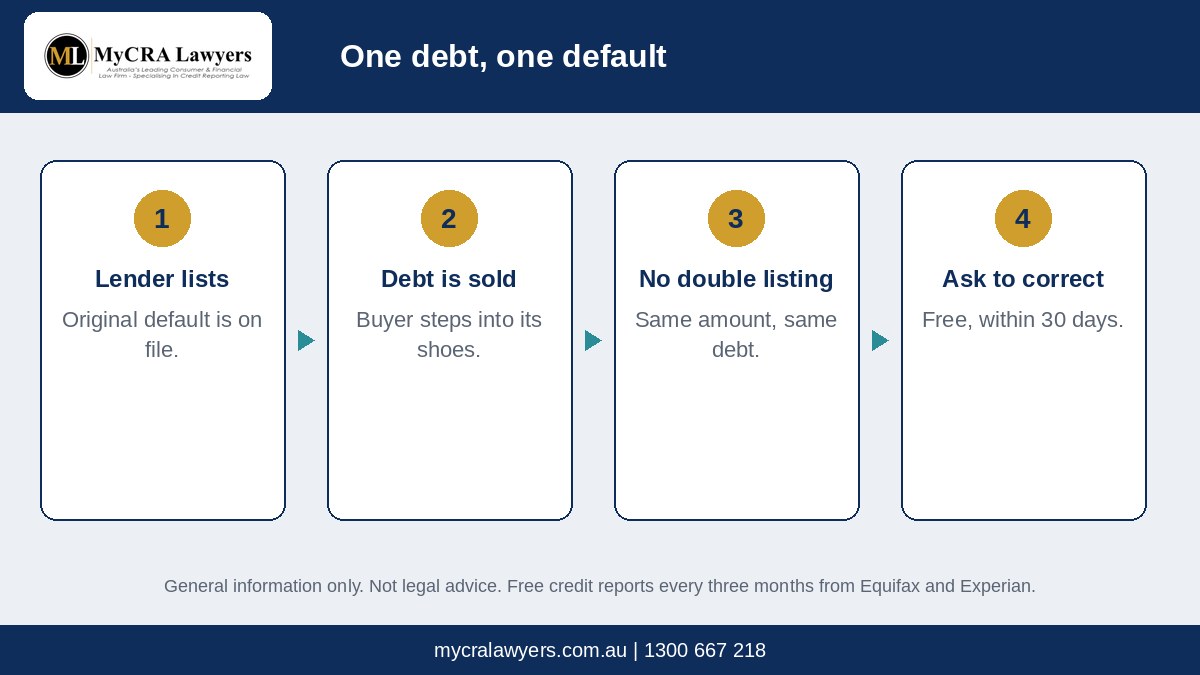
- the original lender and the new owner must make sure the bureau is told about the transfer within 45 days, including the new owner’s name;
- after that, the new owner reports any updates the rules require; and
- the new owner is treated as having made the disclosures the original lender made.
In other words, it’s meant to be one listing that changes hands, not a second listing on top of the first. Our guide on assigned debts and credit listing risks covers the wider picture.
Can the amount or date change?
The amount can. The date shouldn’t. The Code lets a lender update the overdue amount for interest, fees and other charges that build up because of the overdue payment. But when the amount is updated, the original date the default was disclosed stays the date the five-year time limit runs from.
The Code also says a default must not include an overdue amount that was already listed as a default on that same credit. And if a lender later lists the whole loan as overdue, and that includes an amount it already listed, it must ask the bureau to destroy the earlier default. Again, one debt, one default.
That’s why the date matters so much. A default stays for five years from when the bureau collected it. If a buyer lists the same debt again with a new date, the mark could hang around far longer than it should. Our guide on how long a default stays explains the five-year rule.
Is it really a duplicate? 4 things to check
- Is it just two bureaus? The same default on your Equifax report and your Experian report is one listing reported to two bureaus. That’s not a duplicate.
- Is it two different accounts? Two services with the same telco, or a card and a loan with the same bank, can be separate debts. Compare account numbers and amounts.
- Is one a court judgment? If a creditor sued and got a judgment, the judgment can appear as a separate type of information. That’s not a second default, but it is worth looking at. See removing a court judgment from your credit file.
- Do the details line up? If the original creditor, the amount (before interest and fees) and the period all match, and the second listing has a later date, you may well be looking at the same debt listed twice.
How do I get a duplicate default fixed?
- Pull both reports. You can get a free credit report from each bureau every three months. Save the PDFs. See how to get your free credit report.
- Write to the party that made the second listing. Say which listing you believe duplicates which, and ask for the duplicate to be removed and for the original listing date to be kept. You can also ask the bureau to correct it. You don’t have to choose the right door; either must consult the other.
- Ask for the paperwork. Request the assignment notice, the account history and the notices the original lender says it sent.
- Watch the clock. Corrections are free and generally must be dealt with within 30 days. Our guide on the 30-day correction rule covers the steps.
- Escalate if needed. If they refuse, they must give written reasons and tell you about AFCA. Many collectors and debt buyers are AFCA members. See AFCA complaints about credit defaults.
While you’re there, check the original default too. A duplicate is easy to spot. A listing made without the right notices is harder to see, but just as worth checking. See default notice requirements. If the debt is very old, read statute-barred debts and your credit file as well.
Not sure what you’re looking at? Start with a free credit file analysis at app.FixMyBadCredit.com.au. If collectors are pressuring you, the National Debt Helpline (1800 007 007) offers free financial counselling.
How can MyCRA Lawyers help?
If your report shows what looks like the same debt twice, or a default with a date that doesn’t add up, send us both Equifax and Experian PDFs. A team member will read the file and tell you whether it looks like a duplicate worth challenging.
MyCRA Lawyers is a specialist credit repair law firm. Have your Equifax and Experian report PDFs ready and reach us through our contact form, call 1300 667 218 or 07 3124 7133, or book a 15-minute credit repair intro call. Postal: PO Box 169, Aspley QLD 4034. We quote fixed fees in writing after we assess the file, and we will tell you plainly if a listing looks like a wait-out rather than a viable dispute. On consumer defaults accepted after initial assessment, our independently audited success rate is 91.6%. Selected consumer default work includes a Money Back Guarantee on published terms. No law firm can promise every listing will come off, and we don’t. For defaults in particular, see our default removal service page.
Not ready to talk yet? Pull both free reports and start with a free credit file analysis at app.FixMyBadCredit.com.au. For the bigger picture of how listings are challenged, read our credit repair lawyers Australia guide.
Frequently asked questions
Can a debt collector list a new default for a debt that’s already listed?
When a debt that already has a default is transferred, the Credit Reporting Code treats the new owner as having made the original listing. One debt should not become two defaults.
Can the default amount change after the debt is sold?
It can be updated for interest, fees and charges that build up because of the overdue payment. The original listing date stays the date the five-year period runs from.
Is the same default on Equifax and Experian a duplicate?
No. That is usually one listing reported to two bureaus. A duplicate is two listings for the same debt on the same report.
How long do I have to wait for a duplicate to be fixed?
Correction requests are free and generally must be dealt with within 30 days, unless you agree in writing to longer.
What if the collector refuses to remove the duplicate?
They must give you written reasons and tell you about external dispute resolution. You can then complain to AFCA if they are a member, or to the OAIC.
General information only. Not legal advice for your circumstances. Liability limited by a scheme approved under Professional Standards Legislation.


Leave A Comment