MyCRA Specialist Credit Repair Lawyers

Tag: bad credit report

  • Have Bad Credit? A bad credit loan is not your only option.

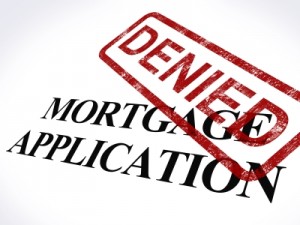
    bad creditFor someone who is locked out of mainstream credit because of their credit rating, their finance options become limited. But there are options, and in Australia, it may not always be entering into a “bad credit” loan. There are alternatives, depending on whether the credit file holder has grounds to dispute the bad credit tarnishing their credit file. We examine the ins and outs of bad credit loans in Australia, and the instances where it may be both fairer and cheaper to examine compliance with a credit repairer instead.

    By Graham Doessel, Founder and CEO of MyCRA Credit Rating Repair and www.fixmybadcredit.com.au.

    A bad credit report is a deal breaker with most mainstream Credit Providers. Bad credit can include defaults, writs, Judgments, Bankruptcies and even excess credit enquiries. From March 2014 it will also include payments more than 5 days late to licenced Credit Providers (loans, credit cards etc).

    [fusion_builder_container hundred_percent=”yes” overflow=”visible”][fusion_builder_row][fusion_builder_column type=”1_1″ background_position=”left top” background_color=”” border_size=”” border_color=”” border_style=”solid” spacing=”yes” background_image=”” background_repeat=”no-repeat” padding=”” margin_top=”0px” margin_bottom=”0px” class=”” id=”” animation_type=”” animation_speed=”0.3″ animation_direction=”left” hide_on_mobile=”no” center_content=”no” min_height=”none”]

    Graham Doessel
    Graham Doessel
    Founder & CEO
    MyCRA Credit Repairs &
    www.ADSLAW.com.au

    Bad credit impacts most people for between 5 and 7 years – and 2 years for repayment history. Most mainstream Credit Providers will refuse credit – particularly in the current economic climate. Often people can’t even get a mobile phone plan.

    Despite this, many alternative loans are available out there for people who are on the outer due to bad credit defaults and other credit listings. But these bad credit (non-conforming) loans generally come at a much higher interest rate, which can cost people tens of thousands more in interest just over the first three years of the loan.  This is in order to cover the risks associated with taking on someone with bad credit. For example, on a loan of say $300,000, the difference in 2% from the standard variable rate of say 7% to a bad credit loan rate of say 9% could mean a family is paying as much as $15,046.57 more over those first three years just in interest.

    Prior to branching out into credit repair, I ran a successful non-conforming brokerage helping people who were refused mainstream credit. But with many people – when I heard about the circumstances around their bad credit – I often felt they had been dealt an unfair blow – forced to pay thousands more in interest when the bad credit possibly shouldn’t have been there in the first place.

    This is why, the first port of call when someone is faced with bad credit, should be to determine the accuracy of the credit listing.

    Savingsguide.com.au published a great article on bad credit loans in Australia, titled A Guide To Loans For People With Bad Credit.

    It features some pertinent advice about choosing a loan after being refused credit with a mainstream lender. It goes through the steps you may need to take to secure finance in Australia, and includes some final tips for securing a loan. The central tip is, prior to committing to a loan attempt to fix your bad credit issues first.

    “Loans for people with bad credit should really be a last resort, as opposed to the only option. See what you can do to repair your credit rating beforehand and hopefully begin looking for loans just as anyone else would,” Savingsguide.com.au’s Alex Wilson says.

    Australians should not put up with bad credit if it shouldn’t be there. Any credit listings which the individuals believe are inconsistent, unfair, or incorrect should be disputed.  Credit rating errors could be anything from the credit listing placed by the Credit Provider on the wrong credit file; to the basis of the credit listing being unfounded; to incorrect notices being provided; right through to system errors and incorrect spelling, to name a few examples.

    Creditors are bound by a large volume of legislation and codes of conduct to do with placing information on consumer credit files. These laws are in place to protect consumers from unfair and damaging credit reporting.

    Credit repair is a lengthy process, involving the review of all documentation from an individual – including the credit file and all the circumstances surrounding the default, writ or Judgment.

    The credit repairer will conduct an audit-like investigation of the circumstances surrounding the credit listing, noting any compliance issues which would deem the credit listing unlawful and require its removal from the credit file. If the credit listing has been placed unlawfully, then it should be removed.

    When an inconsistent credit listing is removed, it generally means the consumer is able to apply for mainstream credit – provided bad credit was the only item preventing finance approval.

    If you would like an assessment for your suitability for credit repair, talk to a consultant at MyCRA Credit Rating Repair on 1300 667 218 – they can assess how you might fare in removing bad credit before you commit to any bad credit loan in Australia. Do bear in mind – there are some credit listings which MyCRA cannot remove from your credit file, including Bankruptcies.

    Image: Stuart Miles/ www.FreeDigitalPhotos.net

     [/fusion_builder_column][/fusion_builder_row][/fusion_builder_container]

  • As confidence returns, home buyers need to fix credit problems

    Good news may be on the horizon for the Aussie mortgage market. Mortgage sales for January 2012 have revealed a significant return in confidence for home buyers. But with that renewed confidence should come a forewarning for home buyers about how to make the most of preparations of savings records, wages and stability through matching it with a credit ‘clean up’ for easier finance approval.

    By Graham Doessel, Founder and CEO of MyCRA Credit Repairs and www.fixmybadcredit.com.au

    According to AFG (Australian Financial Group), mortgage sales for January 2012 have soared above figures for last year. It released its AFG Mortgage Index last week in which it showed national mortgage sales increased by 40% this January compared to last year. AFG says the changes mark a return to more normal trading levels.

    Sales in Queensland were up 80.6% and in South Australia 84.5%, with other states showing significant uplifts compared to January 2010 ? WA (+ 37.4%), Vic (+25%), NSW (+14.5%).

    January also saw WA take over from NSW as the most popular state for First Home Buyers. Almost one in five new mortgages (19.1%) in WA was arranged for First Home Buyers compared to 14.0% in NSW. Through the second half of last year, NSW led the country as the most active First Home Buyers market.

    However NSW retains its position as the most popular state for investment, with 40.2% of loans there arranged for investment purposes, compared to 36.8% in Victoria, 34.9% in Queensland, 32.6% in Western Australia and 32.0% in South Australia.

    Although confidence might have returned, there will still be a significant number of home buyers who fail to realise their home ownership dreams due to a bad credit report. It is estimated there are approximately 3.47 million Australians who have a bad credit rating (negative listings on their credit file). (Veda November 2008).

    As credit repairers, we meet many people who seek help to fix credit problems, and astoundingly, many of those people should qualify for a home loan. It may surprise people to know that many prospective borrowers we see have significant savings records, or even currently own property and have good income. They can be knocked back for finance by a bad credit history that should not be there.

    Do you need a credit clean up?

    Many credit files contain errors or inconsistencies due to simple human error from creditors, or from creditors simply not complying with credit reporting legislation. Often it is not until people apply for a home loan that they find out about them. Even if people already own property, they can be banned from refinancing, investing, or from upgrading their home due to credit rating defaults or other credit file problems.

    Any negative listing – from defaults, to Judgments and even excess credit enquiries will stop most people from getting a home loan in this market, or force them into a high-interest loan, costing them thousands more in interest.

    Negative listings remain on a person’s credit file for 5 -7 years, depending on the listing type. These black marks can show up for outstanding bills as low as $100.

    Credit file errors

    A survey by Choice Magazine as far back as 2004 points to approximately 30% of the credit files in the survey likely to contain errors. That’s a staggering amount of credit file errors potentially out there.

    Recently Channel 7’s Today Tonight interviewed Veda Advantage’s Head of External Relations, Chris Gration on the possible number of errors on credit reports. He admitted errors within their system alone amounted to 1%.

    “We give out about 250,000 credit reports to consumers every year. But only in 1 per cent of cases is there a material error on the file, so a default or an enquiry that’s incorrect,” Mr Gration told Today Tonight.

    Even if as little as 1 per cent of those 14 million credit files contained errors, that would still currently leave 140,000 credit files in Australia containing errors that just shouldn’t be there.

    The nature of credit reporting is that there is much opportunity for human error and these errors are usually not uncovered until people go about checking their credit file. Often people are unaware of their responsibility to maintain the accuracy of their own credit file – and so they don’t find out about their credit issues until they apply for a home loan.

    Then, once people find problems with their credit file – they often find the process of removal of errors from their credit report difficult.

    What is the best way to fix credit problems?

    Current legislation does allow people to have inconsistencies removed from their credit file, but in reality many people are not successful when they attempt to fix it themselves.

    Often it is because they are not schooled enough in the legislation or can’t devote the necessary time to it to ensure a successful credit repair. Sometimes people who attempt to fix credit problems themselves can do more harm than good through lack of knowledge, or difficulty in negotiating with creditors or by alerting them too early to mistakes on the credit file.

    A borrower’s credit file is one of the key factors to home loan approval. People should not underestimate this factor.

    Make it right with a credit file check and credit clean up before you apply for a home loan

    It is important to get it right, and the onus is on the credit file holder to maintain its accuracy. House hunters can and should request a free copy of their credit file every year from one or more of the credit reporting agencies such as Veda Advantage, Dun and Bradstreet or Tasmanian Collection Services (TASCOL) if Tasmanian.

    A free copy of their credit report will be mailed to them within 10 working days. A creditor may have place a negative listing with all or one of these credit reporting agencies. If there are any inconsistencies, they should seek a reputable credit repairer for a credit clean up.

    ABS Statistics differ

    AFG statistics are currently projecting significantly more confidence than the latest data from Australian Bureau of Statistics figures shows, particularly in Queensland.

    The November Lending Finance Statistics show the number of owner occupied housing commitments in Queensland stayed flat in October to November, recording a 0.0% change in Queensland.

    We will watch avidly to see if data from AFG matches with the ABS’ review of January housing finance and lending statisitcs due out in March.

    For brokers, agents and property owners – rising mortgage rates in many states and particularly in post-flood ravaged Queensland, would be very good news indeed.

    Image: Danilo Rizzuti/ FreeDigitalPhotos.net

  • Australia Day – New Australians left in the dark over credit system

    Media Release

    New Australians left in the dark over credit system

    24 January 2012
    Australia Day is the time when thousands of new Australians are welcomed into the country’s dynamic multi-cultural society, but a national credit repairer says the road to financial success in Australia can be a harsh one for new migrants.
    He says new Australians don’t get enough help to make the most of their finances, and to ensure they are never blacklisted once they become credit-active.
    MyCRA’s CEO, Graham Doessel says he deals first-hand with many new migrants who have struggled to come to terms with a credit system which is far different to the one they are used to, and ultimately their Australian credit rating can suffer.
    “I am seeing more new Australians caught out with the system here, being banned from new credit – can’t get a home or car loan and often from fairly small amounts in arrears on their credit accounts,” Mr Doessel says.
    Australia’s credit reporting system is fairly unique in the fact that it is currently a negative reporting system. There is no way of balancing out a bad credit report with good repayments, and any negative listing remains on a person’s credit file for 5-7 years.
    Once an individual is 18 and is credit-active, they have a credit file issued in their name. It is even at this early stage where some new migrants come unstuck. Sometimes in those early stages the credit file can be issued under the wrong name.
    “Creditors have been known to mix up names or put someone’s last name as their first name. This could potentially open up a can of worms in terms of correct listing,” he says.
    Creditors can also place a default on the wrong person’s file.
    “We have a case at the moment where a lady had a default listing placed on her file which was for a male with a similar name. It wasn’t until our client applied for a loan that she found out about the default placed on her file from someone else’s account,” he says.
    It is suggested that new Australians make a point of ensuring continuity with their name on any credit they take out and requesting changes to any bills or documentation which come back incorrect.
    They should also check their credit file to make sure everything reads correctly.
    “It’s actually not just new Aussies who are kept in the dark. Many Australian-born Aussies are unaware they should be checking their credit file regularly and that they can obtain a credit report for free every 12 months,” Mr Doessel says.
    Many people are unaware that once an account goes past 60 days in arrears, it will be listed as a default on the person’s credit file for 5 years.
    A common reason people can have defaults go unnoticed is after they move house or when they go overseas for extended holidays. They fail to divert their mail, and do not receive the written notification of either the late account, or the creditor’s intention to list the late payment as a default on the person’s credit file.
    “Identity theft is a major problem in this country, and many new migrants are not aware of the frequency of attacks, or the need to safeguard their personal information. They end up with their identities stolen, and credit taken out in their name,” Mr Doessel says.
    Sometimes migrants can become victims of identity theft before they even get on the plane. In December, 2010 Immigration Minister, Chris Bowen warned new migrants of online scams that often leave them without a visa and at a loss for the money they have spent. (2)
    “It is vital that people are aware of fraudsters’ tricks before handing over money for immigration assistance which is never provided,” Mr Bowen said.
    Mr Doessel is offering new migrants free information on using credit in Australia, and how they can best keep their credit file clean. Contact info@mycra.com.au or call tollfree 1300 667 218 for more information.
    “We should use Australia Day to help our fellow Aussies, and raise awareness of the problems our new migrants face, so we can all experience financial success,” he says.
    /ENDS.
    Please contact:

    Lisa Brewster – Media Relations   Mob: 0450 554 007
    media@mycra.com.au
    Graham Doessel – Director Ph 07 3124 7133

    www.mycra.com.au
    www.mycra.com.au/blog 246 Stafford Rd, STAFFORD Qld

    MyCRA Credit Repairs is Australia’s leader in credit rating repairs. We permanently remove defaults from credit files.