MyCRA Specialist Credit Repair Lawyers

Tag: non-conforming loan

  • Have Bad Credit? A bad credit loan is not your only option.

    bad creditFor someone who is locked out of mainstream credit because of their credit rating, their finance options become limited. But there are options, and in Australia, it may not always be entering into a “bad credit” loan. There are alternatives, depending on whether the credit file holder has grounds to dispute the bad credit tarnishing their credit file. We examine the ins and outs of bad credit loans in Australia, and the instances where it may be both fairer and cheaper to examine compliance with a credit repairer instead.

    By Graham Doessel, Founder and CEO of MyCRA Credit Rating Repair and www.fixmybadcredit.com.au.

    A bad credit report is a deal breaker with most mainstream Credit Providers. Bad credit can include defaults, writs, Judgments, Bankruptcies and even excess credit enquiries. From March 2014 it will also include payments more than 5 days late to licenced Credit Providers (loans, credit cards etc).

    [fusion_builder_container hundred_percent=”yes” overflow=”visible”][fusion_builder_row][fusion_builder_column type=”1_1″ background_position=”left top” background_color=”” border_size=”” border_color=”” border_style=”solid” spacing=”yes” background_image=”” background_repeat=”no-repeat” padding=”” margin_top=”0px” margin_bottom=”0px” class=”” id=”” animation_type=”” animation_speed=”0.3″ animation_direction=”left” hide_on_mobile=”no” center_content=”no” min_height=”none”]

    Graham Doessel
    Graham Doessel
    Founder & CEO
    MyCRA Credit Repairs &
    www.ADSLAW.com.au

    Bad credit impacts most people for between 5 and 7 years – and 2 years for repayment history. Most mainstream Credit Providers will refuse credit – particularly in the current economic climate. Often people can’t even get a mobile phone plan.

    Despite this, many alternative loans are available out there for people who are on the outer due to bad credit defaults and other credit listings. But these bad credit (non-conforming) loans generally come at a much higher interest rate, which can cost people tens of thousands more in interest just over the first three years of the loan.  This is in order to cover the risks associated with taking on someone with bad credit. For example, on a loan of say $300,000, the difference in 2% from the standard variable rate of say 7% to a bad credit loan rate of say 9% could mean a family is paying as much as $15,046.57 more over those first three years just in interest.

    Prior to branching out into credit repair, I ran a successful non-conforming brokerage helping people who were refused mainstream credit. But with many people – when I heard about the circumstances around their bad credit – I often felt they had been dealt an unfair blow – forced to pay thousands more in interest when the bad credit possibly shouldn’t have been there in the first place.

    This is why, the first port of call when someone is faced with bad credit, should be to determine the accuracy of the credit listing.

    Savingsguide.com.au published a great article on bad credit loans in Australia, titled A Guide To Loans For People With Bad Credit.

    It features some pertinent advice about choosing a loan after being refused credit with a mainstream lender. It goes through the steps you may need to take to secure finance in Australia, and includes some final tips for securing a loan. The central tip is, prior to committing to a loan attempt to fix your bad credit issues first.

    “Loans for people with bad credit should really be a last resort, as opposed to the only option. See what you can do to repair your credit rating beforehand and hopefully begin looking for loans just as anyone else would,” Savingsguide.com.au’s Alex Wilson says.

    Australians should not put up with bad credit if it shouldn’t be there. Any credit listings which the individuals believe are inconsistent, unfair, or incorrect should be disputed.  Credit rating errors could be anything from the credit listing placed by the Credit Provider on the wrong credit file; to the basis of the credit listing being unfounded; to incorrect notices being provided; right through to system errors and incorrect spelling, to name a few examples.

    Creditors are bound by a large volume of legislation and codes of conduct to do with placing information on consumer credit files. These laws are in place to protect consumers from unfair and damaging credit reporting.

    Credit repair is a lengthy process, involving the review of all documentation from an individual – including the credit file and all the circumstances surrounding the default, writ or Judgment.

    The credit repairer will conduct an audit-like investigation of the circumstances surrounding the credit listing, noting any compliance issues which would deem the credit listing unlawful and require its removal from the credit file. If the credit listing has been placed unlawfully, then it should be removed.

    When an inconsistent credit listing is removed, it generally means the consumer is able to apply for mainstream credit – provided bad credit was the only item preventing finance approval.

    If you would like an assessment for your suitability for credit repair, talk to a consultant at MyCRA Credit Rating Repair on 1300 667 218 – they can assess how you might fare in removing bad credit before you commit to any bad credit loan in Australia. Do bear in mind – there are some credit listings which MyCRA cannot remove from your credit file, including Bankruptcies.

    Image: Stuart Miles/ www.FreeDigitalPhotos.net

     [/fusion_builder_column][/fusion_builder_row][/fusion_builder_container]

  • Churning – who says it’s bad?

    Press Release

    churningChurning – who says it’s bad?

    12 April 2013

    Churning for self interest is without question a highly unethical practice for a broker to perform, but a consumer advocate says when it comes to expensive credit, there can be such a thing as an ethical churn.

    CEO of MyCRA Credit Rating Repair, Graham Doessel says for clients who are currently sitting in a high interest loan, there are potentially tens of thousands of dollars which can be saved by their broker turning their loan over to mainstream credit, and he says it can happen easier than many brokers think.

    “It is often thought that if a client has bad credit, it is meant to be there, when in reality mistakes are extremely prevalent in credit reporting but it has in the past been difficult for individuals to make a case to dispute their credit listing,” Mr Doessel says.

    Traditionally clients with bad credit are steered by brokers towards the non-conforming loan market – but Mr Doessel argues they should first be given the right to have their credit listings assessed for compliance with current law.

    “A professional credit repairer will conduct an audit-like investigation on the client’s credit file – and in most cases there are compliance issues or out and out mistakes which can see the listing proven unlawful and be required to be removed from the credit file,” he says.

    He says this practice has seen his clients save thousands of dollars just in interest alone on a home loan.

    Comparison Table $400,000 loan over 30 years

    Repayment time frame Min. repayment on interest rate 10.5% Min. repayment on interest rate 6% Difference in interest paid.
    Monthly $ 3,658.96 $ 2,398.20 $ 1,260.76 
    Weekly $ 843.97 $ 553.05 $ 290.92 
    Yearly  $43,907.52 $28,778.40 $15,129.12

    Over an average three-year period in a non-conforming home loan a client with a $400,000 loan could be paying over $45,000 extra in interest.

    Mr Doessel says in these instances it is not only ethical for brokers to churn their clients, but they almost have an obligation to do so.

    “When we consider these figures, brokers are almost ethically obligated to ensure that no clients are paying this extra interest unnecessarily – which could involve going back through client databases and uncovering some of the basic circumstances surrounding the bad credit, or even more basically – by sending bad credit clients for a credit repair assessment.”

    “In the past we’ve found clients who are given that option to save themselves so much money are pretty grateful, they’re more likely to give brokers repeat business or to refer – and the advantage to using a broker becomes really evident to them,” Mr Doessel says.

    /ENDS.

    Please contact:

    Graham Doessel – CEO Ph 3124 7133

    Lisa Brewster – Media Relations media@mycra.com.au

    Ph 07 3124 7133 www.mycra.com.au www.mycra.com.au/blog

    MyCRA Credit Repair 246 Stafford Rd, STAFFORD Qld

    MyCRA is Australia’s number one in credit rating repairs. We permanently remove defaults from credit files. CEO of MyCRA Graham Doessel is a frequent consumer spokesperson for credit reporting issues and is a founding member of the Credit Repair Industry Association of Australasia.

    Image: suphakit73/ www.FreeDigitalPhotos.net

  • Inside Secrets for the Best Mortgage

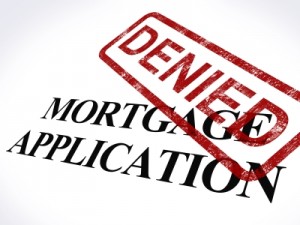
    Can we trust everything we believe to be true about applying for finance? We look at some great information to help you get the best deal on your home loan – and look at why a bad credit is something you should know about before you apply for a mortgage, to avoid being refused credit.

    By Graham Doessel, Founder and CEO of MyCRA Credit Rating Repairs and www.fixmybadcredit.com.au.

    Yesterday I read a great article in the Herald Sun titled “Time To Topple Mortgage Myths”. The article uses the information from top finance professionals to debunk five common mortgage myths. We look at the advice of those finance experts, and give you further advice as it relates to your credit rating and risk assesment. Here is the Herald Sun’s article:

    Myth 1: Lowest interest rate loans are best

    Unfortunately many borrowers will judge one home loan against another simply on the interest rate, which can be a big mistake.

    If they make their decision on this “headline” rate, it could cost them tens of thousands of dollars extra, Resi Mortgage chief executive Lisa Montgomery says.

    “Most borrowers don’t look at the comparison rate but they must,” Montgomery says.

    “Check the comparison rate. It’s a great rule of thumb that helps you understand at a glance the true cost of a loan.
    “It includes all the upfront and ongoing fees that need to be paid during the course of the loan.”

    Fees and charges can add several basis points to the cost of the loan. Read the mortgage contract for all the details.

    Whilst it is true the lowest interest rate may not always be the best, a high interest loan isn’t either. I am referring to a non-conforming loan used by people with negative listings on their credit report (or “bad credit”). In terms of saving money, this is seldom a better option. If there is any inkling that the bad credit shouldn’t be there, you will always save money if you can have your credit rating repaired by a professional credit repairer rather than continuing with a non-conforming loan – even if for only three years. For example, on a $300,000 loan – it would cost you $23,000 more in interest over the first three years at 9% interest, versus a more “mainstream” rate of say 7%. If you have bad credit, you should find out if you are suitable for credit repair before entering a high interest loan.

    Myth 2: Bad credit ratings prevent borrowing

    Your credit rating can both help or hinder the type of mortgage you are offered. If you have a poor record, it does not automatically mean you won’t get a loan.

    But it can mean a lender will consider you a greater risk and want to charge a higher interest rate.

    Not all unpaid bills and default histories will stop you getting the best deal.

    Mortgage broker 1300HomeLoan managing director John Kolenda says defaults on utility bills or phone bills can be explained and overlooked.

    “But it is very important to make sure you tell your lender about your history,” Kolenda says.

    “Don’t let them find out when they do your credit worthiness search.”

    It is not always the case that people are refused a home loan if they have bad credit, but it is never ideal. As mentioned above, depending on how high the interest rate will be – it may make more sense to look at those bills or other defaulted accounts that can be “explained” or which were unfair or mistaken and have them negotiated to be removed so as to get the best deal you can.

    If you do want to discuss your options with your lender while knowing you have bad credit, yes it is very very important to be honest with them about your credit file. But where many people come unstuck and are refused credit is when they don’t know about it before they apply. This surprise bad credit can occur for a number of reasons, maybe the Creditor had the wrong billing address, or the default was a mistake, or you weren’t notified. Either way, it looks bad for you and means you fail that credit worthiness test. Surprise bad credit is often worth investigating to ensure the listing was put there lawfully by your Creditor.

    Myth 3: Offset accounts are the best way to cut your interest

    Financial research company Canstar analyst Mitchell Watson says there are much better ways to cut your interest costs than using an offset account.

    “A lot of people will have their wages or salary paid into a mortgage offset account each month but for the average wage earner this isn’t going to be worth much at all,” he says.

    “An offset account for someone on about $65,000 is only going to save about $20 a month interest. Over the life of the loan, however, it does add up to about $14,000.

    “However, if you make fortnightly payments instead, so you divided the monthly amount by two and pay it every fortnight, you will save about $55,000 over the life of the loan and cut your loan term by four years.

    “Better still, do both – use an offset (account) and fortnightly payments.”

    Myth 4: If you pay off your credit card, you’ll be able to borrow more

    Wrong. Even if you owe nothing on your credit card, the limit will still be counted towards your total potential outstanding debt, according to 1300HomeLoan.

    “Your credit card limit affects your maximum borrowing capacity with some lenders. For that reason, you should reduce your limit or cancel the cards you are not using before applying for a home loan,” Kolenda says.

    Even with new information provided for in our new credit laws which are in the process of going through Parliament, your credit limit, rather than the amount owing will be used to assess your debt level.

    Myth 5: Pre-approved loans are pretty much guaranteed money

    This is not true, the experts say.

    Pre-approval is an offer to lend money based on a percentage of the property’s value.

    The price you pay is not necessarily its value, Montgomery says.

    “Always sign a contract of sale ‘subject to finance’ even if you have a pre-approval,” Kolenda adds.

    “Your valuation needs to stack up and you will still need final approval.”

    Are you sure the lender has done a credit check before providing the pre-approval?

    The best course of action is – prior to applying for a home loan, request a copy of your credit report from Australia’s credit reporting agencies yourself. It is free once every year and will be mailed to you within 10 days. This way, you will know whether your credit file will let you down at the mortgage application stage and you won’t accumulate a ‘credit enquiry’ or any black mark against your name by letting the lender do the credit check and find out too late that you have problems that could have been fixed.

    If you would like help to fix bad credit before applying for a home loan, contact a Credit Repair Advisor on 1300 667 218 or visit our main website for more information www.mycra.com.au.

    Image: Stuart Miles/ www.FreeDigitalPhotos.net

  • First Home Buyers Dive in Again But Will They Stay In the Water?

    Most agree that First Home Buyers are the key to the Australian housing market. How are they doing? Are they being attracted by the current market conditions? Or are they even able to dip a toe in with the current lending criteria forcing them to save for years just to get up enough deposit? We look at the factors impacting first home buyers – and why those buyers who present with a good income and a good deposit but bad credit can be saved.

    By Graham Doessel, Founder and CEO of MyCRA Credit Rating Repairs and www.fixmybadcredit.com.au.

    Last week AFG announced it had had its strongest July in 5 years…thanks to first home buyers.

    AFG told Australian Broker a “powerful cocktail of incentives” has helped them to process the highest amount of mortgages in July since 2007 – totalling $2.7 b.

    They report the percentage of first-home buyers has climbed to 17.3%.

    “Low interest rates, soft property prices and escalating rents create a powerful cocktail of incentives to get people into the property market,” said AFG’s general manager of sales and operations, Mark Hewitt.

    Is an improving housing market a reality? Or perhaps – as some experts have touted – simply the result of skewed indicators due to the June ending of government incentives in some States?

    Westpac senior economist Matthew Hassan told the Financial Review last week that there were “consistent” indicators from various sources to the “beginning of a stabilisation in prices”.

    But he said it was too early to call a definite improvement. He pointed to the end of various state government home-buyer incentives in June, which had pulled forward demand and artificially inflated buying activity.

    Let’s hope house prices are stabilising, and more and more first home buyers have the confidence (and money) to enter the market again.

    So if you, as a broker are in the right market to see a resurgence of first home buyer activity, what are the factors impacting credit decisions?

    An article in The Australian recently, reported that an average couple will need to save for at least five years to reach the amount required for a first home deposit.

    The study by financial comparison company Rate City shows a first home buyer would take five years and seven months to save a 10 per cent deposit of $30,667 for a mortgage size of $276,000.

    And a dual income couple with a mortgage capacity of $540,000 would take more than five-and-a-half years to save a 10 per cent deposit of $60,000…

    A 10 per cent deposit is now the minimum amount required by many lenders, while many banks want at least a 20 per cent deposit before they relax their requirements for mortgage insurance.

    Rate City found it would take a first home buyer 13 years to save the recommended 20 per cent deposit plus $10,000 for fees.

    These people that have saved for 5 to 10 years to be able to buy a home in their area have got to be dedicated. This commitment to frugality is often undermined at the time of finance application by a little thing called the credit file. Well, actually it’s a big thing. The lending criteria for risk-management as it relates to the credit check has changed post-GFC just as the deposit and savings requirements have.

    So how can it be fair that someone who has scrimped and saved for 5 years to get the deposit together can be refused the pot at the end of the rainbow, purely on the say-so of, say a Telco company whose listing may or may not be lawful?

    And how can it be fair that a broker must turn these savers away? Or put them into a loan with a non-conforming lender at high interest rates which sees them struggle just to make ends meet every month?

    These questions often come back with a few different responses from brokers who don’t know about or use the services of professional credit repair firms…

    1. Yes, but if they have done the wrong thing and not paid their credit – they shouldn’t be given any more.

    2. If their listing is not lawful, they should take it up with the creditor before they come and see their broker.

    3. They can refinance the non-conforming loan and get into a standard loan after a few years.

    4. Exactly, I see clients like this, but unfortunately if they have bad credit for whatever reason, they are just not getting a mainstream loan. You can’t remove bad credit until the listing drops off. Don’t touch those clients.

    So what is the reality of bad credit clients? Let’s answer those 4 statements…

    1. If people have done the wrong thing and not paid their credit, they shouldn’t be given any more – it’s true. But what exactly is “the wrong thing?” Moved house and had bills come to their old address despite contacting the creditor to change their details? Had a dispute with a creditor that they thought was resolved? Been the victim of a creditor’s mistake? Had a period of temporary financial hardship which was ignored by the creditor? These are very common scenarios as to why the credit listing is deemed unfair. Often this is reason to request the listings removal from the client’s credit file.

    2. Clients often don’t know they have bad credit until they apply for a home loan. Then often when they attempt to dispute the listing with their creditor themselves, they have little success. There is a host of legislation which must be adhered to when placing listings on credit files. It is the legislation that creditors can hide behind when consumers come to them to dispute their credit listing. Consumers just need someone on their side who is equally knowledgeable in credit reporting and industry legislation, and with the ability to negotiate on their behalf to remove anything which is demonstrated to be unlawfully listed.

    3. Clients could enter into a non-conforming loan for a few years, and sometimes this is the only choice. But it is so much extra money in interest. On an average non-conforming loan of $300,000, the client will pay $15, 046.57 extra at 9% as opposed to a standard rate of 7%. (The cost of employing the services of a credit repairer to restore the good credit rating is miniscule when compared with this). If they are able to remove the bad credit, then they can be sent back to their broker to enter into mainstream credit, and save themselves thousands.

    4. Despite what creditors tell consumers, bad credit can be removed if it is unlawful. There are a host of reasons why it may be unlawful – and credit rating errors are more common than most people think. It has been reported in the past through a study by the Australian Consumer Association (now Choice) that as many as 34% of people surveyed had credit files which contained errors of some kind.

    The solution is, to refer the client to a professional credit repair firm once you find out their credit file is tarnished. They can do the work to repair the credit file whilst keeping in touch with you on their progress. The client can be sent back to you once their credit file has been repaired. You can have the best loan for them lined up and ready to go.

    Talk to a Credit Repair Advisor at MyCRA Credit Rating Repairs on 1300 667 218 if you think we can help you save more bad credit clients.

    Image: jannoon028/ www.FreeDigitalPhotos.net

  • How To Save On Your Home Loan and Prevent Mortgage Stress

    A drop in house prices across many parts of the country could see some families owing more than their homes are worth.  Luckily interest rate cuts may offset this change and give people the chance to make some headway on their home loan despite the reduced equity. So what are some real and significant things families can do to actively reduce their home loan and prevent mortgage stress or at worst – bad credit from late payments?

    By Graham Doessel, Founder and CEO  of MyCRA Credit Rating Repairs and www.fixmaybadcredit.com.au.

    The Australian Bureau of Statistics reported earlier this month that house prices around Australia have fallen by an average of 4.5 per cent over the past 12 months.

    For people who have recently purchased their first home, this could amount to some negative equity – which is quite a frightening prospect for many. For those about to purchase their first home – it could put them off buying all together. But this may not need to be the case. Certainly many buyers in this market should be fairly cautious with where they buy – but it just may be a case of ensuring they look at their purchase as a long term investment – structuring their loan accordingly if possible and allowing for places where they can make extra payments to their loan.

    The Sydney Morning Herald recently ran an article titled Extra payments a winner showing how the recent interest rate cut can actually make a significant difference for home owners if they continue to make mortgage repayments at the previous level.

    “The 50-basis-point cut represents a $96 a month reduction in mortgage payments for home buyers with an average-size loan of $300,000 (assuming the full cut is passed on).

    But for people who can afford to maintain their payments at their current higher level it presents a great opportunity to make inroads into their outstanding principal and build a buffer for tougher times.

    Given the uncertainty in markets, and the economy, it is a good strategy to build greater equity in the home,” the article says.

    They recommend visiting ASIC’s Money Smart website to calculate the potential interest saved on extra payments to their home loan: www.moneysmart.gov.au/tools-and-resources/check-asic-lists .

    The article included this significant advice for borrowers:

    A home borrower’s handbook to keep you out of trouble

    ❏ Know what you can afford. Don’t rely on the lender to tell you what you can borrow. Make your own assessment by writing a household budget with all outgoings and see if there is enough to cover the mortgage repayment. According to Veda Advantage and Fujitsu Consulting mortgage stress reports, the groups that most often get into trouble with repayments are low-income families and young families.

    ❏ Don’t just look at the rate. According to QBE LMI’s 2012 Australian mortgage market study, when people are looking for a loan they place most emphasis on the interest rate and the fees. Options such as redraw, offset and the ability to split the loan between fixed and variable rates are given a low priority.

    ❏ Stress-test your loan. Lenders will check to see if you can continue to make payments if rates go up 2 percentage points. What if rates go up 3 percentage points or more?

    ❏ Watch your credit-card spending. Surveys of people experiencing hardship with home-loan repayments show that large credit-card debts can be the trigger for arrears or defaults.

    ❏ Make extra repayments. According to ING Direct’s Financial Wellbeing Index, 40 per cent of mortgage holders are making extra repayments on their home loans. These payments serve two purposes: they create a buffer that can be called upon if circumstances require; and they speed up the repayment of the loan.

    ❏ Invest in your mortgage. A lump-sum payment that reduces the loan principal is, in effect, an investment with a return equivalent to the mortgage interest rate, free of tax.

    ❏ Deal with problems early. The Legal Aid Mortgage Stress Handbook recommends that borrowers seek advice early from their financial institution or a financial counsellor. Many people leave it too late.

    Unfortunately, for those home owners who have entered into a higher interest rate with a non-conforming loan, the interest rate cuts will be negligible for them. They can be up for tens of thousands of dollars more during the first three years of the loan. Our calculations show on a home loan of $400,000 they could be charged an extra $22,867.15 more in home loan repayments over the first three years of the loan. This is based on average loan of $400,000 over 30 years on non-conforming loan interest rate of 9.5% versus the standard variable rate of 7%.

    To calculate potential savings people can visit the MyCRA Calculator.

    For people considering a non-conforming loan due to bad credit that should not be there, it would be extremely beneficial for them to instead look at disputing the credit listing and having their credit rating repaired. If they were successful in having listings removed from their credit report which either should not be there or were put there in error, they could restore their good credit rating in this instance and apply for a standard home loan – potentially saving themselves thousands.

    But instead it is often the case that people get a negative credit listing after a dispute with a creditor or worse – surprise bad credit – and are under the impression they have to put up with the hand they are dealt with. Some contact their creditor, and are told that they can have the listing marked as paid if the account was paid, but the listing is never removed from their credit file. The ‘paid’ listing is unfortunately still going to be a detriment to their ability to qualify for a home loan and they are stuck with the tag of ‘bad credit’ for between 5 and 7 years depending on what’s on their credit file.

    However, if the listing was put there unlawfully or unjustly, then the credit file holder does have the right to have those inconsistencies addressed and potentially removed from their credit file. It takes lots of knowledge of the relevant legislation and some good negotiation ability to be able to formulate a successful case to remove a listing. Which is where credit rating repairers come in – to act on the credit file holder’s behalf and enforce that legislation creditors are bound to comply with, helping to demand accuracy in credit reporting and negotiate for the removal of those listings which shouldn’t be there.

    In this market – it can make all the difference for a potential borrower – and be a fight entirely necessary to make to ensure people get the home loan they deserve.

    For help and advice on credit rating repair, contact MyCRA Credit Rating Repairs on 1300 667 218 or visit our main website www.mycra.com.au.

    Image: chainat/FreeDigitalPhotos.net

  • Home owners with credit file defaults forking out $15,000 more in interest

    Australians who are living with defaults on their credit file could potentially be hit with a whopping $15,046.57 or more in additional home loan repayments over the first three years of their loan if they are lucky enough to get one.

    Although this week’s predicted 0.25 per cent interest rate cut did not occur, each previous one had the potential to pass on a saving of around $50 per month to the average householder for a mortgage of $300,000 if the full amount was passed on.

    By Graham Doessel Founder and CEO of MyCRA Credit Repairs and www.fixmybadcredit.com.au.

    But for those Australians who are living with credit rating defaults, last year’s interest rates cuts, and any which are predicted in the near future will be negligible.

    Our calculations show families with a $300,000 loan who are unlucky to have defaults on their credit file for 5 years, who are able to secure a loan with a non-conforming lender will be paying a staggering $417.96 more per month in interest rates.

    We talk about massive savings for the average Australian with these cuts, we talk about encouraging people to switch lenders, but this is not a reality for people with defaults. Most banks won’t lend them money, forcing them into non-conforming loans and paying top dollar because their credit file shows they are a bad risk – and it may not be true.

    It is a fact in our experience that there are many families living with unfair defaults.

    It is not known for sure how many of the over 14 million credit files in Australia could contain errors or inconsistencies.

    The possible volume of errors on Australian credit files was exposed by a small scale study conducted in 2004 by the Australian Consumer Association (now Choice Magazine). It revealed about 30% of credit files were likely to contain errors.

    “In our view, there are serious, systematic flaws which are leaving an increasing number of Australian consumers vulnerable to defamation, mis-matching and harassment,” the ACA report said.

    Transferring those figures from the Choice study to the number of credit files in Australia today, could take the figures to over 4  million errors, inconsistencies or flaws.

    Recently Channel 7’s Today Tonight interviewed Veda Advantage’s Head of External Relations, Chris Gration on the possible number of errors on credit reports. He admitted errors within their system alone amounted to 1%.

    “We give out about 250,000 credit reports to consumers every year. But only in 1 per cent of cases is there a material error on the file, so a default or an enquiry that’s incorrect,” Mr Gration told Today Tonight.

    We feel based on the ACA study and the Choice survey that the real figure across the board is likely to be in the middle somewhere – much higher than 1%. With 14.6 million Australian Veda Advantage credit files alone 1 per cent of errors amounts to 140,000 Australians’ financial lives potentially in ruins through no fault of their own.

    Under current credit reporting legislation, it is up to the consumer to check for errors. Credit file holders are able to obtain a copy of their credit report from one or more of Australia’s credit reporting agencies for free every 12 months.

    Unfortunately consumers are often not aware across the board of their responsibility to check the accuracy of their own credit file, so many errors go undetected.

    Errors do occur, but often it is not until people apply for a loan that they learn they have an adverse listing on their credit file, but by then it is too late to correct errors and they are generally refused credit or forced to take on non-conforming loans at sky-high interest rates to secure the home.

    When disputing any adverse listing, it is up to the credit file holder to provide reason as to why the creditor has not complied with legislation.

    Unfortunately many people find this process difficult at best – negotiating with creditors is not always easy for the individual to undertake.  Our job as credit repairers is to check the creditor’s process of listing defaults for legislative and or compliance errors, any such errors could deem the credit file default listing unlawful, at which time we advise the creditor to remove the default.

    If you want a home loan, or to re-finance, but are weighed down by credit rating defaults, contact us to see how we can repair credit fast.

    Image: renjith krishnan / FreeDigitalPhotos.net

    Image: digitalart / FreeDigitalPhotos.net